

 Acoustical Ceiling Tiles
The Value of Acoustic Treatments and Soundproofing Materials: Can Hear You Hear Clarity?
Good spaces look great. Great spaces sound great, too. That’s the part people forget–until the echo hits, voices overlap, and fatigue sets in. The difference between a space that just looks finished and one that actually feels finished often comes down to a single phrase: acoustic treatments.
They’re the tools that tame echo and reverb so speech is intelligible, music is defined, and the overall energy of a room feels calm instead of chaotic. If you’ve ever walked into a space that looks perfect on paper but somehow feels loud, “ringy,” or just really uncomfortable, you’ve heard and experienced what happens when room acoustics get overlooked or ignored.
This guide walks through what acoustic treatment really is, what it’s worth, how to budget for it, and the main options available–from simple wall panels to suspended baffles or ceiling clouds and bass control. The goal isn’t to turn every room into a recording studio; it’s to make everyday environments more comfortable and functional. And when that happens, people communicate better, stay longer, and perform at their best–returns you can both hear and see in your bottom line.
What is Acoustic Treatment and Why is It Important?
Think of acoustic treatment as the art of making sound behave. It’s about adding thoughtfully placed absorbers and diffusers so the sound inside a room stays clear and balanced. Instead of bouncing around, harsh reflections fade quickly. Speech and music become more distinct.
In practice, that means surface mounted acoustical ceiling and wall panels, ceiling clouds, acoustic baffles, and corner bass traps–each working to reduce reflections rather than eliminate sound entirely. It’s a common misconception that acoustic treatment and soundproofing are the same thing. They’re not. Soundproofing blocks sound from entering or leaving a space. Acoustic treatment shapes the sound inside the room once you’re in it. \
Read More: Common Soundproofing Mistakes to Avoid
Speech Intelligibility and Focus
The first and biggest benefit for introducing absorption into a room is improving speech clarity. In classrooms, restaurants, meeting spaces, and worship halls, uncontrolled reflections blur speech and force everyone to speak louder. It’s uncomfortable for your body and often tiring for your ears and brain. Acoustic treatments improve speech intelligibility so every word lands cleanly. Teachers don’t have to raise their voices over background noise. Meetings run smoother. Restaurant guests don’t lean in and say, “Sorry, what?” every few seconds.
That’s especially true in places where communication drives results–think conference room acoustics, classroom acoustics, or even open office noise control. With balanced room acoustics, people process information faster and stay engaged longer. That’s a measurable productivity boost hiding in plain sight.
Fatigue and Perceived Loudness
There’s also a physiological side. When echoes fade faster, the brain and body relax. People perceive the space as quieter even when the actual decibel level hasn’t changed much. You talk at lower volumes because you’re not competing with yourself in a wall of reflections. By reducing reverberation, you cut fatigue. It’s a subtle change that makes hours in a room–whether a call center, restaurant, or gym–feel far less draining.
See Also: Decibel Level Chast (dB Scale)
Aesthetics and Integration
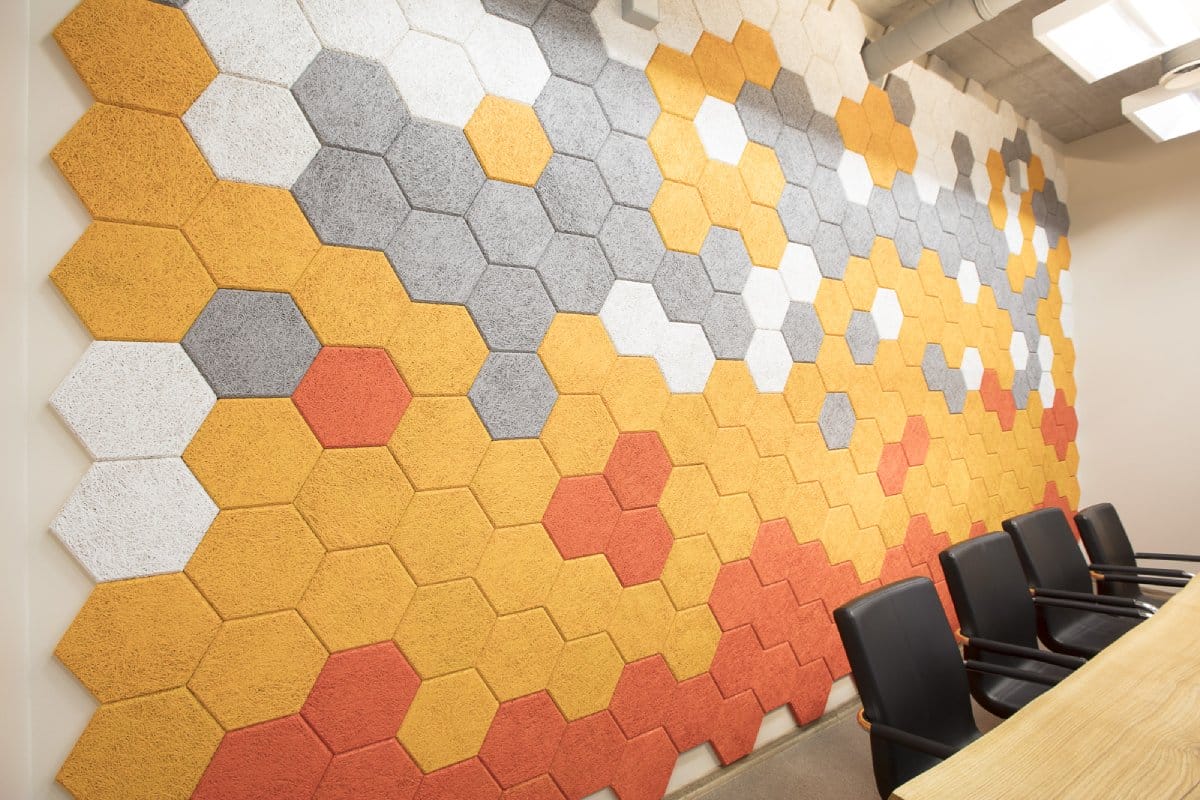
Years ago, you had to choose between good acoustics and good design. Not anymore. Modern products come in nearly any color, texture, or printed pattern you can imagine–fabric-wrapped acoustic panels, sculpted felt, wood-slat finishes, even acoustic wall art that doubles as décor. Schools can add their emblems and mascots, while offices and hospitality spaces can incorporate branded acoustic solutions that complement existing design palettes.
Good acoustic treatments blend in visually while transforming how a space feels. And while panels won’t block external noise, they will make the interior space dramatically more focused and enjoyable. If you need both clarity inside and isolation from outside sound, you’re looking at a combined strategy: acoustic treatment plus soundproofing (mass, airtightness, and decoupling). Knowing the differences saves money and sets expectations right from the start.
How Much Should I Spend on Acoustical Treatments?
Although this is an important factor and question, the best place to start isn’t in the price tag–it’s at the outcome you want. Do you need quieter conversations, cleaner recordings, or just less echo? Once you define that, the right coverage and materials start to fall into place.
The right amount of acoustic treatment depends on four things:
- How the room is used
- How it is shaped
- How big it is (volume)
- How reflective its surfaces are
DIY builds for small rooms can land anywhere from $100 to $900–think DIY wood framed fabric-wrapped panels that utilize cotton or PET felt acoustic panels as the absorptive core. Mid-sized spaces like classrooms or meeting rooms, where a more specific and finished approach is required, usually runs in the $2-6k ballpark. Larger performance or purpose-built recording spaces can cross $10k when you add specialty pieces like acoustic diffusers, ceiling clouds, low-frequency specific bass traps, or custom finishes.
Those numbers may sound broad, but that’s the reality. You’re paying for coverage percentage as well as panel type and thickness, not just the product name. Thicker panels absorb lower frequencies; more surface area means faster reverberation decay. Suspended ceiling materials add cost too–ceiling clouds and acoustic baffles are powerful tools but require safe rigging and hardware. And if your space has sprinklers or tight mechanical zones, installation logistics matter more than material costs.
Professional guidance from our team at Acoustical Surfaces can help dial in the right scope before you overspend. We will help you target the high-impact areas–first reflection points, ceiling zones, and corners–so you get meaningful results without treating every square foot.
Read More: How Many Acoustic Panels Do I Need for My Space?
Durability vs. Longevity
This is where the “buy once, cry once” rule applies. Schools, gyms, and restaurants take abuse. These spaces require resilient materials and easy-clean finishes. In offices or studios, softer architectural textiles hold up while keeping camera-friendly looks.
Longevity matters too. Denser cores–like mineral wool insulation or fiberglass core panels–keep their shape, retain their NRC rating, and meet building safety codes with Class A fire-rated panels. Built right and installed in the right locations of your room, they can last decades..
Since these types of treatments are visible, smart buyers look for ways to make them pull double duty. Custom printed panels, patterned felt, or school and team branding can turn plain absorbers into part of your visual identity. For commercial and educational clients, that’s real value: noise control that markets your space while it improves it.
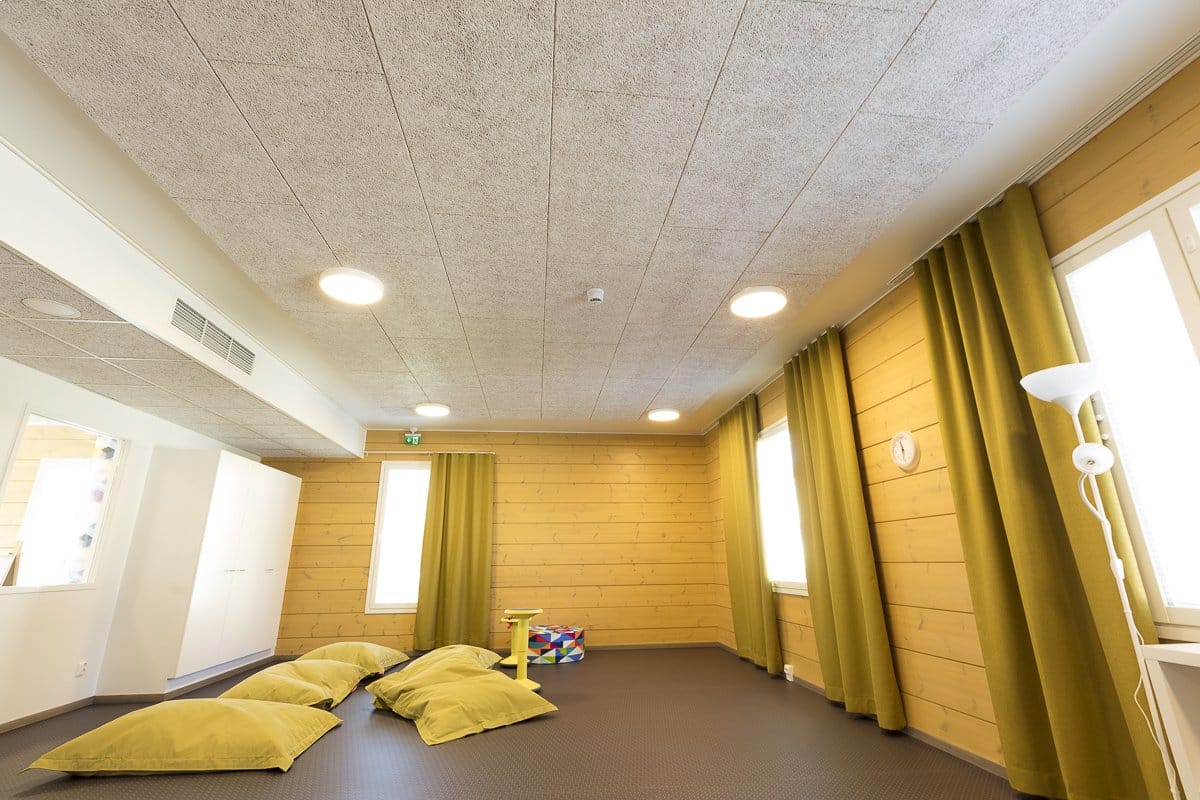
Simple Budget Ladder
Think of this as a practical rule of thumb–what to buy first, and where extra spend actually moves the needle. Keep in mind that these are very general and lose budgetary guidelines. Certain rooms can be treated more economically than others based on the aesthetics and functionality needed for different spaces.
Starter (Small Office, Content Nook) – $100-$900
- Goal: Quiet conversational noise and reduce slapback for recordings.
- What to buy: 2-4 (2’x4’) Echo Eliminator, CFAB Cellulose, PET Poly Max or fabric-wrapped acoustic panels installed at first reflection points, and the potential addition of a couple DIY acoustic panels behind the mic or wall opposite the camera.
- Result: Noticeably cleaner speech intelligibility and fewer “Sorry, what?” moments.
Serious (Meeting Room, Classroom) – $900-$2,000
- Goal: Usable meeting rooms and classrooms where every conversation matters.
- What to buy: Opposing-wall coverage (aim for 30-40% of bare wall area). Consider PET felt acoustic panels, (Poly Max), Wood Wool/Wood Wool Designs, or fiberglass core panels for durability. Custom printed art or graphic stretch wall type systems like WallMate (with Echo Eliminator or Poly Max backers) may also be a great choice for this type of space.
- Result: Lower perceived loudness, better focus, and demonstrable improvement in conference room acoustics and classroom acoustics.
Premium (Studio, Performance Spaces, Larger Open Areas) – $5,000-$10k+
- Goal: Studios, performance spaces, large open offices or hospitality venues where performance is paramount.
- What to buy: Thicker absorbers (mineral wool or fiberglass cores), intentional corner bass absorption, arrays of acoustic baffles or clouds, and selective acoustic diffusers to preserve life in the room. Factor in professional mounting, custom printed panels (branding, school emblems and mascots), and Class A finishes.
- Result: Balanced low end, crisp speech intelligibility across the space, and an aesthetic solution that doubles as branding.
A few practical pointers:
- Coverage percentage matters more than product names–treat the highest-impact surfaces first (first reflection points, ceiling over speakers or presenters, and corners).
- If you’re on a tight budget, prioritize placement and thickness over decorative extras. A poorly placed premium panel gives less value than correctly placed mid-range panels.
- For larger projects, factor in acoustic treatment cost as part of cap-ex with measurable returns: reduced meeting time, fewer complaints, better learning outcomes–real ROI of noise control. And when isolation is required, combine treatment with sound-blocking measures (MLV, RSIC clips, Green Glue) rather than substituting one for the other.
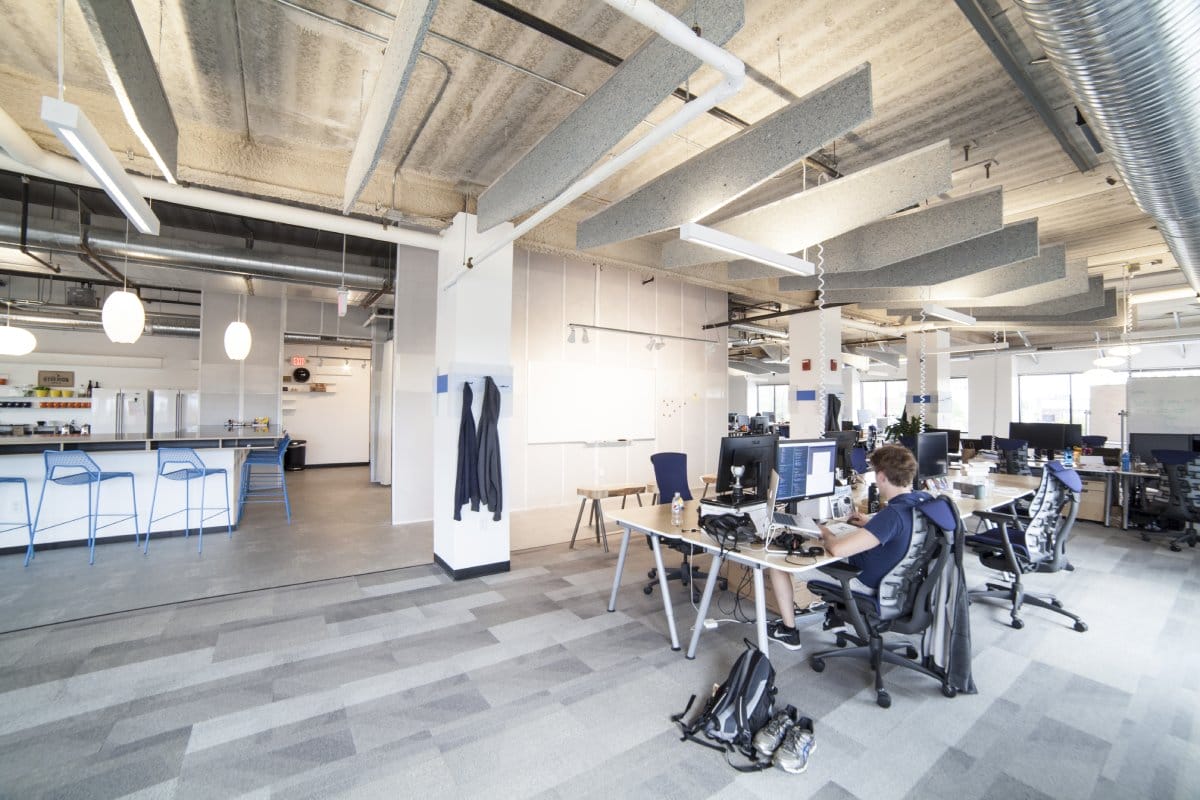
The Five Main Types of Acoustical Treatments
Most rooms don’t need every option on the market–usually two or three types, placed thoughtfully, make all the difference. Still, it helps to know what’s available and where each product fits in your acoustic treatment plan.
1) Wall panels
Flat absorbers are the backbone of most acoustic projects. Fabric-wrapped acoustic panels, PET felt acoustic panels, recycled cotton acoustical foam, and Wood Wool panels reduce reflections off nearby walls. Place them at your first reflection points–the spots where sound from a presenter or loudspeaker hits first. That’s where you’ll hear the clearest improvement in clarity and tone.
Acoustical Surfaces offers multiple core options (fiberglass, recycled cotton, CFAB Cellulose, PET felt, and Wood Wool panels) and a wide variety of fabric choices, along with reliable mounting hardware and wall anchors that make installation secure and easy. Panels can match existing décor or double as acoustic wall art. But remember to choose thickness and placement before pattern, color, or illumination integration.
2) Bass Traps
Low frequencies pile up in corners, creating “boominess.” Bass traps offer corner bass absorption, taming that buildup and evening out low-end response. Thicker is better here; corners (trihedral) are prime real estate. The result is more even bass response and less “boom.”
3) Ceiling Clouds
These are suspended horizontal panels (like flying carpets) that catch overhead reflections, intercepting them where speech and noise accumulate overhead. Ideal for open offices, cafeterias, and classrooms, ceiling clouds can improve intelligibility even without treating walls. They’re often the fastest way to calm a bright or echo-prone space.
4) Acoustic Baffles
Think of acoustic baffles as vertical clouds suspended like flags. They’re efficient when wall space is limited or when ceilings are tall–gymnasiums, pools, and manufacturing floors, for example. Because they expose both sides to sound, they offer higher absorption per square foot.
5) Diffusers
Where absorption smooths reflections, acoustic diffusers scatter them. That keeps rooms from sounding too “dead.” You’ll find them on the side and rear walls of studios, control rooms, and performance spaces where some liveliness is welcome.
A professional acoustic designer–or a quick consultation with Acoustical Surfaces–can help you mix and match these tools effectively. The right blend creates balance: not silent, not echoey–just controlled and natural.
Switching Gears: Stopping Noise from the Outside
Acoustic treatments improve sound inside a space, but they don’t stop unwanted sound from entering or leaving a space. For that, you need isolation or soundproofing. The two work together– acoustical treatment refines room acoustics, while isolation reduces sound transmission through the structure.
Sound isolation relies on three basic fundamentals:
- Adding mass
- Decoupling
- Seal gaps
Each strategy blocks or disrupts how sound energy moves through a structure.
Add Mass
Heavier walls block more sound, plain and simple. That’s why mass-loaded vinyl (MLV), acoustic barrier composites, and double layers of ⅝” drywall with Green Glue damping compound are go-to materials. They make the wall denser and less responsive to airborne vibration.
Products like Acoustical Surfaces’ Mass Loaded Vinyl or Barrier Decoupler (a vinyl and foam composite) are designed for this purpose–they add substantial mass in a thin profile and can be installed behind drywall.
Decouple the Structure
When sound energy hits one side of a wall, the sound energy is converted into a physical vibration that travels from one side of the wall, through the shared framing, and exits into the adjacent room as an airborne sound. Decoupling the wall assembly breaks that path. The most common tools are resilient sound isolation clips (RSIC), hat channels, or double-stud walls. These introduce flexible or separated layers so vibration can’t jump cleanly from one side to the other.
In ceilings or multifamily walls, RSIC systems or spring hangers often deliver the biggest jump in STC (Sound Transmission Class) rating for the dollar. Acoustical Surfaces offers tested assemblies that combine clips, channel spacing, and barrier layers to achieve predictable results.
Seal the Gaps
Even a small crack can ruin isolation performance. Acoustic sealant and door perimeter gasketing are inexpensive fixes that keep high-STC assemblies from leaking sound. It’s the same principle as waterproofing–you can’t leave pinholes and expect full protection.
Seal and Stop Flanking Paths
Flanking noise–sound that travels around, under, or through unintended routes–is the number one reason good walls and ceilings fail. Sound can move through ductwork, ceiling plenum spaces, or even sneak through electrical boxes.
A flexible acoustic caulk seals perimeter joints where drywall meets floors, ceilings, and window frames. Putty pads wrap around electrical boxes to close back-to-back leaks. For doors, door seal kits, automatic door bottoms, and acoustic door sweeps close what’s usually the biggest hole in any wall assembly.
Magnetic window inserts like our Climate Seal Windows are another simple but effective retrofit–especially in offices or studios facing traffic noise. Acoustical Surfaces supplies models with measured STC ratings so performance can be predicted, not guessed.
Floors: Impact and Airborne Noise Control
Impact sound–footsteps, dropped objects, gym weights–travels differently from airborne noise. The solution is resilient underlayment. Products like ACOUSTIK™ recycled rubber underlayment or Duracoustic S.T.O.P.™ create a cushioned layer under hard flooring materials, reducing structure-borne vibration while adding some airborne control. They’re common in condos, fitness centers, and multi-story schools.
Mechanical and Plumbing Noise
Mechanical systems often transmit sound through ductwork or piping. Pipe and duct lagging–typically a quilt of MLV plus a decoupler–blocks breakout noise. VMAX damping sheets dampen ringing metal panels, while HVAC duct silencers and liners reduce noise traveling through the duct with the air, much like a vehicle muffler.
Soundproofing Combined with Interior Treatment
Isolation creates quiet; acoustic treatment creates clarity. Pair barriers and seals with sound absorption panels, ceiling clouds, acoustic baffles, and bass traps inside the room. Together they control both transmission and reflection–two sides of the same acoustic coin.
Most successful spaces are layered: isolation at the building envelope, absorption and diffusion within. Acoustical Surfaces Inc. helps teams design this balance early, integrating field-tested materials and assemblies to hit both the desired STC and NRC targets.
Talk with the Pros at Acoustical Surfaces
Acoustic treatments pay off in more ways than one. When a space sounds balanced–speech is clear, music is detailed, distractions are low–people stay longer, work better, and feel more comfortable. The ROI of noise control shows up in productivity, customer satisfaction, and the polish that defines a well-finished environment. And today’s options–fabric-wrapped acoustic panels, PET felt acoustic panels, custom printed panels, and branded acoustic solutions–make acoustic control a visible design upgrade as well.
Whether you’re comparing soundproofing vs acoustic treatment, planning for better conference room acoustics, or managing restaurant noise, our team can help. We’ll match materials, NRC ratings, and coverage percentages to your goals, drawing on decades of professional acoustic design experience. From DIY acoustic treatments to fully engineered systems, you’ll hear and see the difference.