

 Acoustical Ceiling Tiles
Using Acoustics to Support Neurodiverse Individuals
For many people, sound is background – something that fades into daily life. For neurodivergent individuals, sound can be foreground, unavoidable, and sometimes overwhelming. Neurodivergent sound sensitivity affects how people experience classrooms, offices, healthcare facilities, and public spaces, shaping comfort, focus, and even emotional regulation. When acoustics are poorly managed, everyday environments can become exhausting or exclusionary. When sound is thoughtfully designed, those same spaces can feel calmer, clearer, and more supportive.
This article explores how acoustics can better support people with autism, ADHD, and sensory processing differences. Drawing from research, standards, and lived experience, the focus is on practical design strategies – approaches that reduce overload, improve communication, and respect the reality that neurodivergent and sound-related needs are not one-size-fits-all.
Why Sound Hits Differently for Neurodivergent People
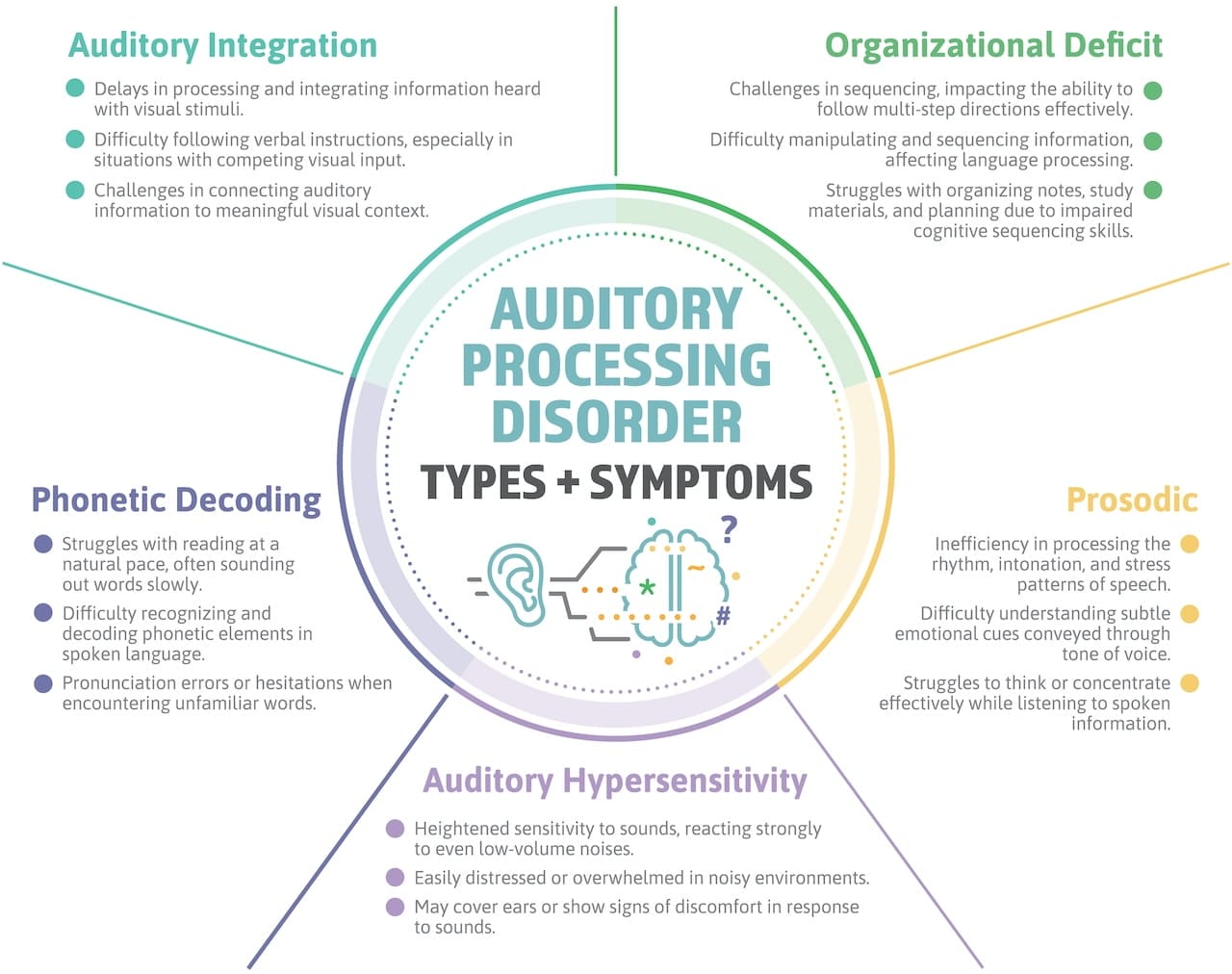
Neurodivergent listeners often experience sound in ways that differ significantly from neurotypical norms. Auditory hypersensitivity is common among individuals with autism and sensory processing disorder, where certain frequencies, sharp transients, or reverberant spaces can feel physically uncomfortable or even painful. This goes beyond simple volume.
People with autism noise sensitivity may struggle with unpredictable sounds – chairs scraping, doors slamming, HVAC cycling on and off. For individuals with ADHD, the challenge is often less about loudness and more about speech in noise. Competing conversations, reverberation, or background chatter can fragment attention and increase cognitive load, making focus and comprehension harder to sustain.
Research and lived-experience accounts consistently show that sound characteristics matter as much as sound levels. Sharpness, modulation, and reverberation all influence how a space feels. A room with modest decibel levels but long reverberation time can still be intolerable for someone with auditory hypersensitivity. Understanding these nuances is the first step toward inclusive design acoustics that genuinely support neurodivergent users.
Read More: Reverb Demonstration
Principles First: Reduce, Control, and Predict
Effective acoustic design for neurodiverse populations starts with three core principles. These ideas are simple, but when applied consistently, they can dramatically improve comfort and usability.
Reduce
Reduce overall sound levels wherever possible. This means aiming for low-noise from HVAC systems, minimizing equipment noise, and incorporating soft finishes that absorb rather than reflect sound energy.
Control
Control how sound moves and behaves within the space. Managing reflections by shortening reverberation time, and interrupting sound paths with partitions or zoning, helps prevent noise from spreading and building up.
Predict
Predict the soundscape. Neurodivergent users often cope better with steady, consistent environments than with spaces full of sudden spikes or surprises. Predictable soundscapes reduce stress and support focus.
These principles align closely with learning space guidance and classroom acoustics standards, which emphasize clarity, low background noise levels, and controlled reverberation. While originally developed for educational settings, they translate well to offices, therapy rooms, and healthcare environments serving neurodivergent populations.
Design Targets & Benchmarks (Adapted to Sensory Needs)
Established acoustic benchmarks provide a useful starting point. Many classroom standards recommend background noise levels at or below approximately 35 dBA, along with short reverberation times to support speech clarity. ANSI S12.60, for example, sets limits on noise and reverberation to improve learning outcomes for all students.
For neurodivergent users, these benchmarks are often a minimum rather than an ideal. Some individuals – particularly those with sensory processing disorders – benefit from even quieter and “drier” spaces. Speech-language and audiology guidance has suggested aspirational targets around 0.4 seconds of reverberation time for small rooms serving highly sensitive listeners.
For individuals with sensory processing differences, benchmarks tied solely to speech intelligibility may not fully capture comfort. In sensory processing disorder acoustics, lower reverberation and steadier background conditions often play a larger role than absolute loudness. Spaces that meet formal standards can still feel chaotic if reflections are uneven or if noise fluctuates unpredictably.
This is where designers can use standards as a framework rather than a ceiling. Measuring both average conditions and variability – how often sound spikes, how long noise lingers – provides a more realistic picture of user experience. Designing for consistency, not just compliance, is often what separates technically adequate rooms from genuinely supportive ones.
The takeaway is not that every space must meet the strictest criteria, but that designers should recognize when standard targets may need adjustment. Flexibility is key, especially in environments serving diverse users with varying sensory thresholds.

Core Toolkit for the Neurodiverse
Before diving into individual treatments, it’s worth emphasizing that there is no single “correct” acoustic solution for neurodivergent users. Needs vary widely not only between diagnoses, but between individuals and even for the same person depending on task, fatigue, or stress level. What works as support in one context may feel overwhelming in another.
This is especially true when considering sensory processing disorder acoustics, where the nervous system may struggle to filter or prioritize incoming sound. In these cases, acoustics function less as a performance upgrade and more as a form of environmental regulation. Thoughtful treatment can reduce sensory load in the same way that good lighting or spatial layout can reduce visual strain.
Increasingly, acoustics are also being discussed as part of neurodivergent sound therapy approaches – not in a clinical sense, but as a complementary environmental strategy. The goal is not to eliminate sound, but to shape it so spaces are easier to tolerate, easier to understand, and easier to recover within. The following tools are most effective when applied as part of a coordinated system, rather than isolated fixes.
Tame Echo and Harshness
Excessive reverberation and sharp reflections are frequent triggers for discomfort. Treating these issues often delivers immediate benefits.
Wall-mounted acoustic panels, high-performance ceiling tiles, and suspended clouds or baffles can significantly reduce flutter echo and harshness. For autistic individuals and those with sensory processing challenges, broadband absorption helps soften the acoustic “edges” of a room, making it feel safer and more manageable. Placement matters: absorption near talkers, along corridors, and on large reflective surfaces tends to yield the most perceptible improvements.
Manage Direct Paths and Sudden Bursts
Sound that travels directly from one activity zone to another is especially disruptive. Acoustic partitions and screens help break line-of-sight sound paths, reducing the intelligibility of nearby speech. For people with ADHD, this reduction in involuntary listening can noticeably improve concentration.
Quiet rooms design should also address leakage points. Door seals, buffer spaces around noisy equipment, and thoughtful adjacency planning all help limit sudden bursts that can derail focus or cause distress. Even small details – like soft-close hardware – contribute to a calmer experience.
Use Sound Masking Selectively
Sound masking occupies a complicated place in neurodiverse design. For some individuals with ADHD, sound masking for ADHD can support attention by smoothing out distractions, a phenomenon sometimes linked to stochastic resonance. For others – particularly autistic users with heightened sound sensitivity – masking can feel intrusive or irritating.
The safest approach is selective use. If masking is considered, it should be gently tuned, limited to appropriate zones, and paired with clear opt-out options. Quiet zones or retreat spaces without masking ensure that no one is forced into an uncomfortable auditory environment. Verification with actual occupants is essential.
Treatments by Space and Type
While core acoustic principles remain consistent, their application looks different depending on how a space is used and how long people are expected to remain there. Duration, activity type, and emotional demand all influence how sound is perceived – particularly for neurodivergent individuals who may already be operating near sensory thresholds.
A classroom designed for sustained listening requires different priorities than a waiting area designed for short-term occupancy. Similarly, therapy rooms often need tighter control over reverberation and background noise than collaborative workspaces, where some ambient sound may be acceptable or even helpful. Understanding these distinctions helps prevent over- or under-treatment.
The examples below highlight how inclusive design acoustics can be adapted across common space types, using familiar benchmarks where helpful while remaining responsive to neurodivergent experience. In each case, the emphasis is on reducing unnecessary effort – making it easier to listen, focus, and self-regulate without constant sensory vigilance.
Classrooms & Therapy Rooms
Educational and therapeutic settings place heavy demands on listening. Low reverberation time, minimal mechanical noise, and strategic absorption near instruction areas are foundational. Referencing ANSI S12.60 provides a credible baseline, but many therapy rooms benefit from exceeding those requirements.
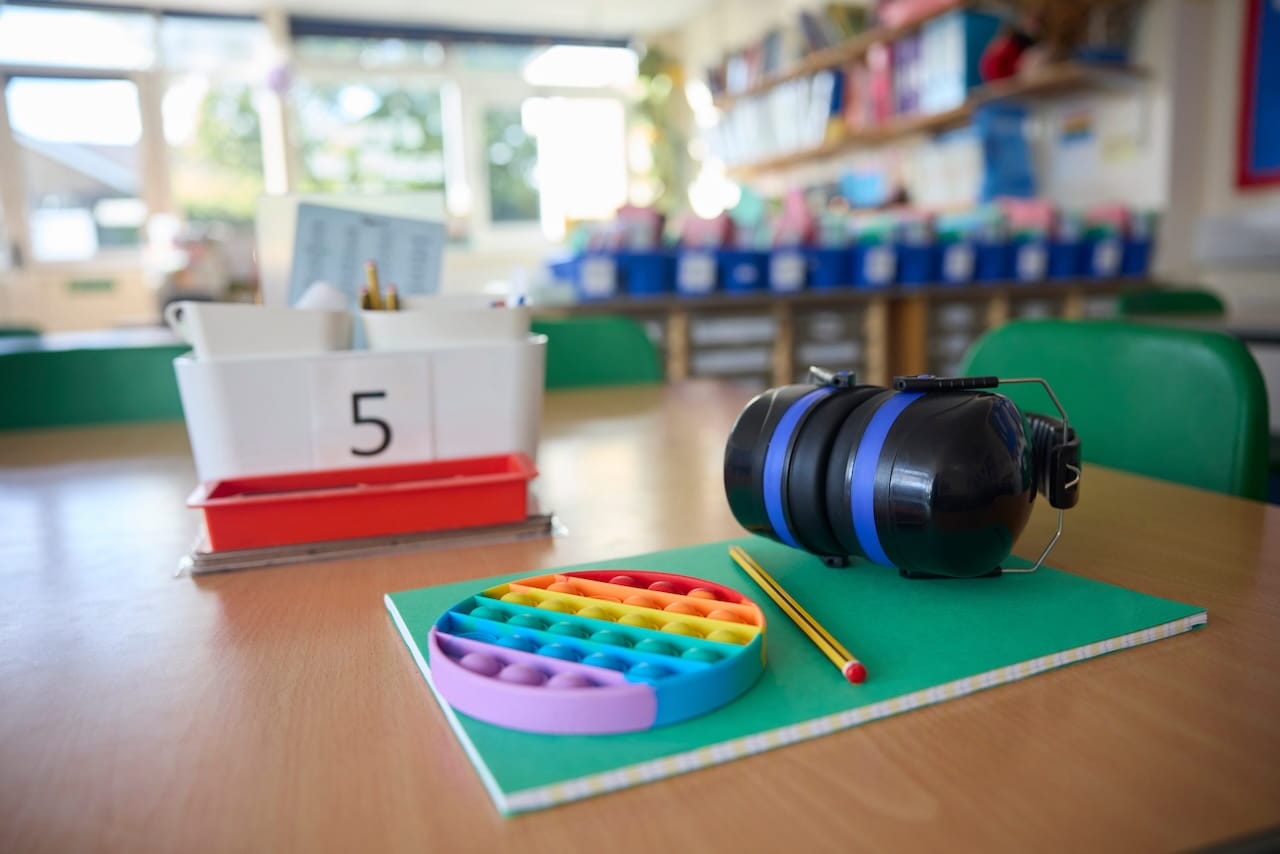
Small retreat corners within classrooms – designed as low-stimulus areas – give students a place to self-regulate when sensory overload builds. These spaces are not about isolation, but about choice and recovery, supporting both learning and emotional well-being.
Open Offices & Libraries
Open environments can be especially challenging for neurodivergent employees and patrons. A combination of ceiling absorption, acoustic zoning, and modest-height partitions helps manage sound without sacrificing openness. Reducing speech intelligibility across zones is often more important than reducing overall volume.
Bookable quiet rooms with higher isolation offer essential refuge. These rooms function as a retreat space for focused work or sensory recovery, reinforcing inclusion rather than segregation.
Healthcare & Waiting Areas
Healthcare spaces are emotionally charged even before acoustics are considered. Short reverberation times reduce clatter from carts and footsteps, while quieter paging and call systems lower stress. Consistent, calm soundscapes – rather than sudden alerts – support patients with auditory hypersensitivity and improve overall comfort for everyone.
Materials, Specs, and Product Choices
Selecting the right materials requires balancing performance with comfort. High-NRC absorbers help trim reverberation without making spaces feel unnaturally “dead.” Acoustically transparent fabrics allow panels to perform effectively while maintaining a welcoming aesthetic.
Mechanical systems deserve equal attention. Quiet equipment, vibration isolation, and careful routing prevent low-frequency rumbles that many users find deeply unsettling. For partitions, height and continuity matter more than appearance alone; interrupting sound paths is key to managing speech transmission.
Importantly, finishes should be evaluated holistically. Acoustic performance, visual calm, and tactile comfort all interact. User feedback – especially from neurodivergent occupants – can reveal issues that specifications alone might miss.
Test, Tune, and Keep Listening
Inclusive acoustic design does not end at installation. Post-occupancy evaluation is where real learning happens. Spot measurements of reverberation time and background noise confirm whether targets have been met. Small pilot trials help assess whether strategies like sound masking are truly beneficial.
An acoustic survey that includes neurodivergent voices provides insights no instrument can capture. Are certain sounds still distracting? Are spaces being avoided? Iteration based on real experience ensures that design intent translates into lived comfort.
For neurodivergent users, the ability to influence or adjust their environment can be as important as the environment itself. Small accommodations – such as providing alternative rooms, scheduling quiet periods, or allowing users to choose where they sit – often amplify the benefits of physical treatments. These operational strategies pair naturally with acoustic improvements and reinforce a sense of agency. When acoustics are viewed as an evolving system rather than a finished install, they align more closely with how neurodivergent people actually experience space: dynamically, contextually, and over time.

Let’s Tune Your Space, Together
Supporting neurodiverse users through sound is both a technical and human endeavor. By addressing neurodivergent sound sensitivity with empathy and rigor, acoustics become a tool for inclusion rather than a barrier.
Our acoustics specialists can help you develop a clear, situation-specific plan. Share room dimensions, photos, and goals, and receive guidance on treatment options, performance targets, and practical details tailored to your space. When you’re ready to move forward, detailed pricing, lead times, samples, and spec sheets make implementation straightforward and confident.
FAQs
Is more absorption always better?
Not necessarily. The goal is clarity and evenness, not silence. Over-absorbed rooms can feel unnatural and uncomfortable. Balanced treatment that controls reflections while preserving a sense of space is usually more effective.
Will masking help or hurt?
It depends on the user. Some individuals with ADHD benefit from carefully tuned masking, while others – particularly those with autism – may find it distressing. Trials, opt-out zones, and user choice are essential.
Thoughtful acoustics recognize that people experience sound differently. When environments are designed with flexibility, predictability, and respect, they support communication, focus, and dignity for everyone – especially those living with neurodivergent sound sensitivity.