

 Acoustical Ceiling Tiles

The Science of Echo: Why It Happens and How to Control It
A conversation in an empty room can sound surprisingly different from the same conversation after furniture and people have been added. Voices seem louder, footsteps linger, and sharp sounds bounce between surfaces. These effects are caused by sound reflections, which can create everything from a distinct acoustic echo to the lingering wash of sound we recognize as reverberation.
To understand what causes echo, start with understanding how these reflections shape room acoustics and which ones need controlling.
What Is an Acoustic Echo?
An acoustic echo occurs when sound reflects off a surface and returns to the listener late enough that it’s heard as a separate repetition of the original sound. For example, shouting toward a distant concrete wall may produce a recognizable repetition of your voice shortly afterward.
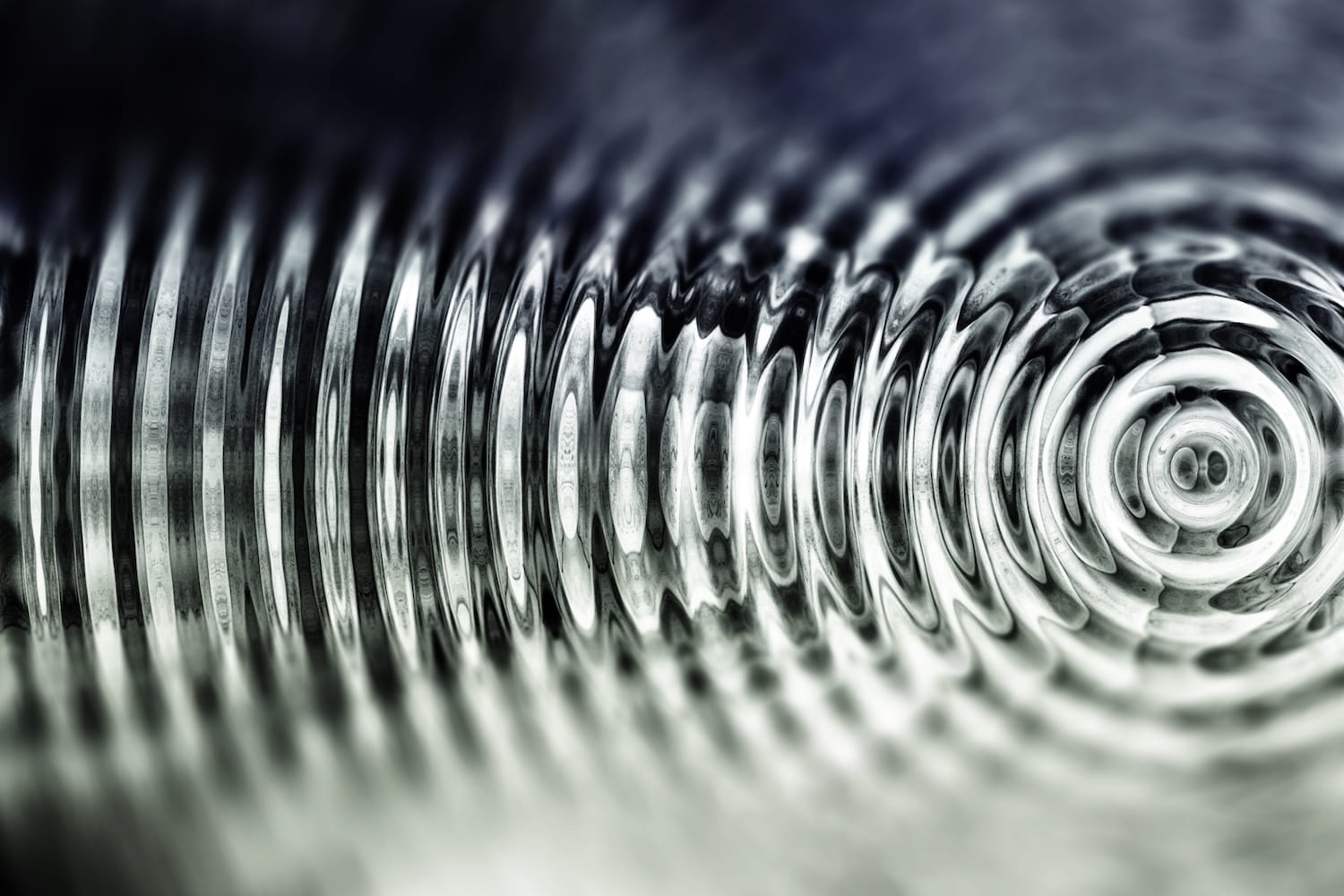
Sound travels outward as pressure waves. When it reaches a surface, some energy is absorbed, some passes through, and some reflects. The timing of that reflected sound determines whether we hear an echo.
How Sound Reflections Create an Echo
Sound travels through air at approximately 1,120 feet per second at room temperature. A reflection must travel from its source to a surface and then back toward the listener, creating a longer path than the direct sound.
The greater the difference in travel distance, the longer the delay between the original sound and its echo. Hard surfaces like glass, concrete, masonry, and drywall tend to reflect more sound energy than soft, porous materials.
Echo vs. Reverberation: What’s the Difference?
Although people often describe a noisy or hollow-sounding room as “echoey,” the problem is frequently reverberation rather than a distinct echo.
An echo is a delayed reflection heard separately from the original sound. Reverberation is the buildup and gradual decay of many closely spaced reflections that blend together. Instead of hearing a repeated word or clap, you hear the sound linger after its source has stopped.
A conference room with hard walls and little furniture might make conversations sound muddy without producing an identifiable echo. That lingering sound is reverberation, and distinguishing between the two helps determine what kind of acoustic treatment will be effective.
What is Flutter Echo?
Flutter echo is a rapid series of reflection traveling back and forth between two hard, roughly parallel surfaces. Clapping your hands in an empty hallway or rectangular room may produce a distinctive metallic ringing or buzzing sound. Hearing that effect can help pinpoint where acoustic treatment is needed.
Why Do Some Rooms Echo More Than Others?
Room dimensions, surface materials, and geometry all influence acoustic reflections. Large rooms and high ceilings create longer sound paths, while expansive areas of concrete, glass, tile, or other reflective finishes allow more acoustic energy to remain in the space.
Parallel walls can encourage repeated reflections, particularly when neither surface has much absorption. The frequency of the sound also matters, since materials that absorb higher frequencies effectively may do relatively little to control lower ones.
Furnishings and occupants can make a noticeable difference. Carpeting, upholstered seating, curtains, and even people absorb some sound energy, reducing the intensity of reflections. This explains why a newly constructed room often sounds dramatically more reverberant before furniture is installed or the space is occupied.
What Is Reverberation Time?
Reverberation time describes how long sound persisted in a room after its source stops. It’s commonly measured using RT60, which represents the time required for sound pressure levels to decay by 60 decibels.
Room volume and total absorption are the primary factors affecting RT60. Larger spaces with extensive reflective surfaces generally have longer reverberation times, while adding effective absorption shortens the decay.
A shorter RT60 isn’t always better, however. A classroom needs relatively controlled reverberation for clear speech, while a concert hall may benefit from longer decay times that give music a fuller, more spacious sound.
Why Excessive Echo and Reverberation Cause Echo
When reflected sound persists too long, it can interfere with sounds that follow. Words overlap, musical notes lose definition, and background noise becomes harder to ignore.
Reduced speech intelligibility is particularly troublesome in classrooms, conference rooms, restaurants, and other spaces where clear communication matters. In gyms, auditoriums, and large public areas, excessive reverberation can also make announcements difficult to understand.
Even when individual sounds aren’t especially loud, their accumulation can make a space tiring to occupy and reduce the effectiveness of meetings, instruction, and everyday conversation.

How Do You Reduce Echo in a Room?
Understanding how to reduce echo starts with limiting reflections, usually through sound absorption at the surfaces responsible.
Add Sound-Absorbing Materials
Echo reducing panels absorb sound energy that would otherwise reflect into the room. Common options include:
- Wall panels: Fabric-wrapped fiberglass, polyester, and other absorptive materials that reduce reflections from large wall surfaces.
- Ceiling panels: Useful for adding absorption without occupying valuable wall space.
- Acoustic clouds and baffles: Suspended treatments that provide additional absorptive surface area in open or high-ceilinged rooms.
When comparing sound absorbing panels, look beyond appearance. Noise Reduction Coefficient (NRC) ratings provide a useful starting point, but panel thickness and frequency-specific performance also matter.
Treat the Most Important Reflection Areas
Placement matters as much as material selection. Large untreated walls, opposing parallel surfaces, and ceilings are often good starting points. In critical listening spaces, treating first-reflection points can help control sound before it interferes with what listeners hear directly.
A few strategically placed panels may solve a localized flutter echo, while larger rooms with widespread reverberation generally need more extensive coverage. For practical guidance on mounting treatments, see our guide to installing fabric-wrapped acoustic panels.
Use Ceiling Baffles or Clouds in Large Spaces
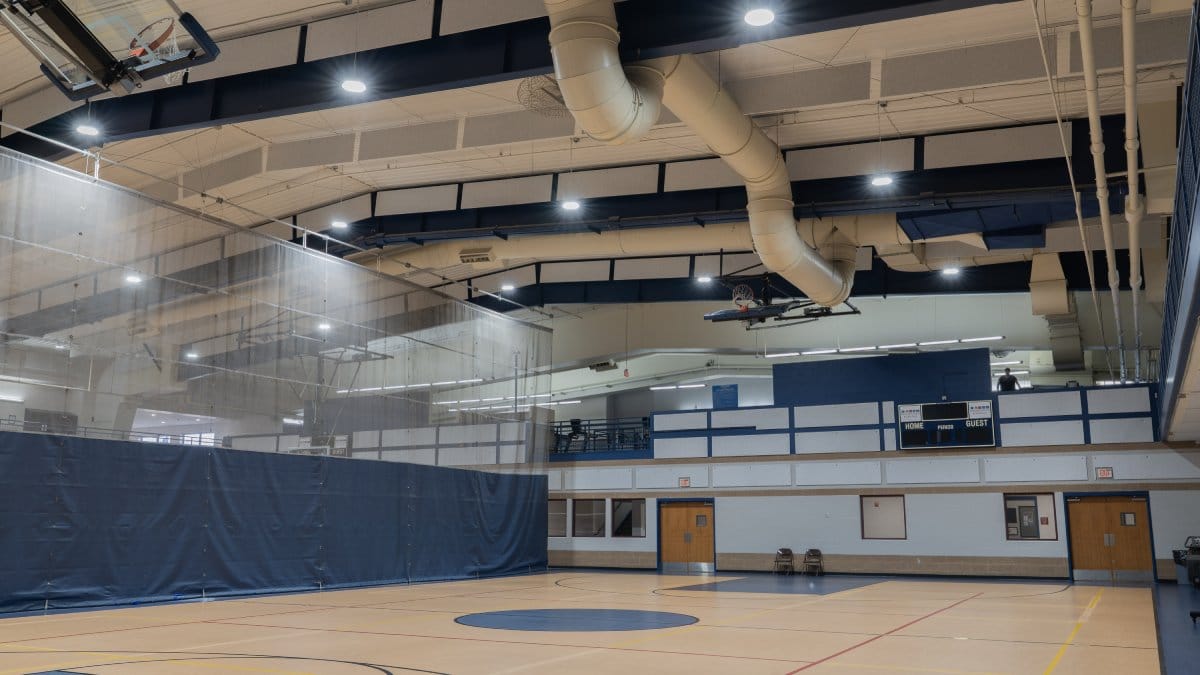
In gyms, warehouses, and other large spaces, treating enough wall area may be impractical. Suspended acoustic ceiling baffles and clouds provide additional absorption without occupying wall space, often exposing multiple absorptive surfaces to reflected sound. They’re particularly useful in rooms with high ceilings and extensive hard surfaces.
Absorption vs. Diffusion: Which Controls Echo?
Both approaches change how sound behaves after striking a surface, but absorption and diffusion serve different purposes.
| Treatment | Primary Function | Best Application |
| Absorption | Reduces reflected sound energy | Excessive echo and reverberation |
| Diffusion | Scatters reflections in multiple directions | Distributing sound while preserving liveliness |
| Sound isolation | Limits transmission between spaces | Noise entering or leaving a room |
For anyone wondering how to reduce reverb, absorption is usually the starting point. Diffusion helps when music rooms or auditoriums need to retain some liveliness.
Does Soundproofing Stop Echo?
Soundproofing and echo reduction address different problems. A conference room can have walls that effectively block sound transmission yet still be overly reverberant inside.
Likewise, adding acoustic panels for echo may make conversations clearer without preventing voices from traveling into neighboring rooms. Understanding when sound absorption isn’t enough starts with identifying whether the problem is reflected sound, sound transmission, or both.
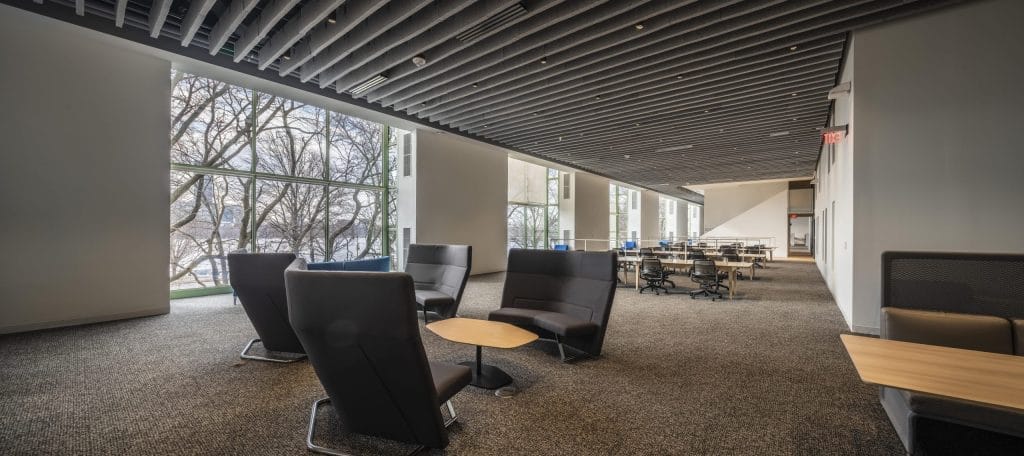
How to Control Echo in Different Types of Rooms
Different spaces present different acoustic challenges. The most effective approach depends on how the room is used, which surfaces dominate, and where clear sound matters most.
Offices and Conference Rooms
Glass walls, hard ceilings, and conference tables can create distracting reflections that interfere with conversations and video calls. Strategically placed ceiling and wall panels help improve speech clarity without changing the room’s layout.
Restaurants and Cafeterias
As conversations multiply, reflected sound adds to the overall noise level, making it harder for guests to hear one another. Treating ceilings and upper walls can help control the buildup without sacrificing seating space or disrupting the interior design.

Classrooms
Students need to hear more than just the teacher’s voice. They need to distinguish individual words and syllables. Excessive reverberation makes that harder, particularly for students seated farther away. Absorptive ceilings and wall treatments can improve speech intelligibility throughout the room.
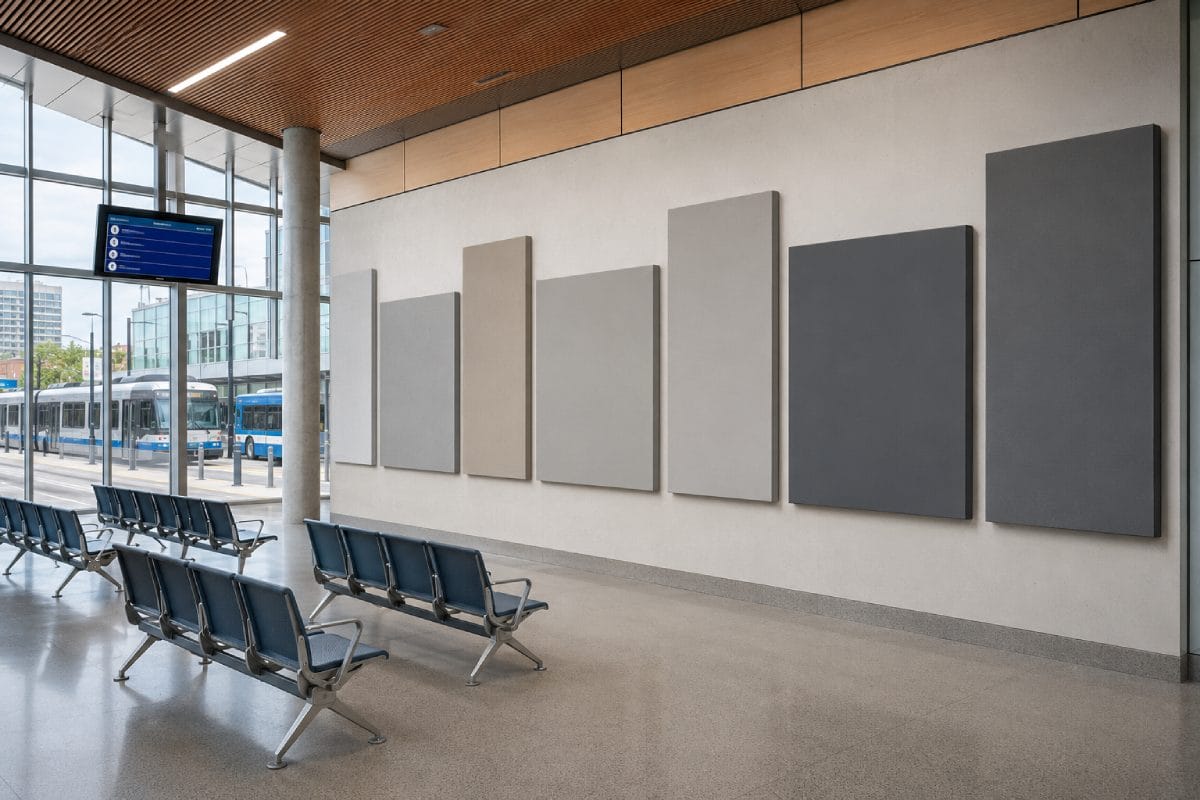
Gyms, Auditoriums, and Large Open Spaces
High ceilings and extensive hard surfaces make these spaces especially challenging. Large-area wall treatments and suspended baffles can provide the absorption needed to control reflection across substantial room volumes.
Studios and Listening Rooms
Accuracy matters more than simply making these rooms quiet. Targeted absorption or diffusion at first-reflection points, low-frequency control, and carefully placed diffusion help maintain a balanced listening environment without making the space sound unnaturally dead.
How Much Acoustic Treatment Does a Room Need?
There’s no universal percentage of wall or ceiling coverage that works for every room. The right amount depends on the room’s volume, existing materials, occupancy, and intended use.
Measuring the current reverberation time and establishing an appropriate RT60 target provides a more reliable starting point. From there, the absorption performance of the selected materials can help determine how much treatment is needed, and where it will be most effective.
Common Echo-Control Mistakes
Even effective acoustic materials can produce disappointing results when they’re used to solve the wrong problem. Common mistakes include:
- Treating too little surface area: A few small panels may have little impact in a large, highly reverberant room.
- Ignoring ceiling reflections: Large untreated ceilings can undermine an otherwise thoughtful wall treatment plan.
- Prioritizing appearance over placement: Symmetrical panel arrangements aren’t necessarily the most acoustically effective.
- Overlooking frequency-specific performance: Thin absorbers may control high frequencies while leaving lower-frequency problems largely unchanged.
- Adding too much absorption: Excessive treatment can leave some rooms sounding unnaturally dead.
Choose treatments using acoustic test data, not appearance or panel quantity alone.
Choosing the Right Treatment for Acoustic Echo
Effective echo control starts with understanding the problem. Reflected sound, noise transmission, and structural reverberation can produce similar complaints, but each requires a different approach.
For rooms struggling with excessive reflections, Acoustical Surfaces offers several treatment options, including Echo Eliminator panels and baffles, fabric-wrapped fiberglass panels, CFAB cellulose-based panels, Sound Silencer panels, and wood wool products. Each provides different advantages depending on the room’s design, installation requirements, and acoustic needs.
The right solution comes down to matching the material, placement, and amount of absorption to the space. Whether you’re addressing a distinct acoustic echo or excessive reverberation, Acoustical Surfaces can help you diagnose acoustic problems and identify a treatment strategy that improves sound quality without compromising the room’s intended use.