

 Acoustical Ceiling Tiles
6 Smart Uses of Fabric-Wrapped Acoustical Products: Specs & Real-World Examples
Effective sound control is a foundational part of good building design. Whether the goal is clearer speech, reduced reverberation, or a more comfortable environment overall, acoustical treatments play a direct role in how a space performs. Among the most versatile solutions available today are fabric wrapped acoustic panels, which combine predictable sound absorption with flexible design options.
When properly specified and installed, fabric-wrapped acoustical products help manage reflected sound energy, improve speech intelligibility, and support both functional and aesthetic goals. This article explores six smart, real-world uses for these products, along with the specifications that matter most when selecting and applying them in commercial, educational, and residential spaces.
What are fabric-wrapped acoustic panels?
Fabric-wrapped acoustic panels are absorptive sound-control products built around a rigid or semi-rigid absorptive acoustic core, wrapped in acoustically transparent fabric. The fabric allows sound to pass through the surface so it can be absorbed within the core rather than reflected back into the room.
As sound enters the panel, friction within the porous material converts acoustic energy into an imperceptively small amount of heat. This process reduces the strength of the reflected sound wave once it strikes the wall/surface that the panel is mounted to, shortens the Reverberation Time (RT60) of the room, and improves audio clarity. From a design standpoint, these products are absorbers – not reflectors or diffusers.
This distinction is important when considering sound absorption vs diffusion:
- Absorption reduces excess sound energy and controls reverberation
- Diffusion scatters sound to maintain a sense of space and liveliness
Most rooms – offices, classrooms, and retail spaces – benefit primarily from absorption. Diffusion is typically introduced only in studios, theaters, and other critical listening environments.
Compared to open-cell foam, fabric-wrapped panels offer broader frequency absorption, greater durability, improved fire performance, and far more design flexibility, making them suitable for permanent architectural installations.
Key Build Options
Fabric-wrapped panels are available in a wide range of constructions to suit different performance and design needs. Most are built with fiberglass acoustic cores, while systems like Wallmate may use alternative absorptive materials such as Echo Eliminator (bonded acoustical cotton), PolyMax PET, or CFAB Cellulose behind a continuous stretch fabric.
Key variables include:
- Thickness: One-inch panels are commonly used for light reverberation control in offices and retail spaces, while two inch panels provide better mid and lower frequency absorption for classrooms, studios, and theaters.
- Fabric: Commercial-grade, acoustically transparent fabrics (such as Guilford of Maine or equivalent textiles) are designed to allow sound through without reducing performance. Many are available in a wide range of patterns, weaves, and colors, with options that allow custom printed images to be applied directly to the fabric.
- Fire Performance: All panel components are tested to ASTM E84 and achieve Class A fire rated performance, which is standard for commercial interiors.
- NRC Rating: NRC (Noise Reduction Coefficient) represents the average absorption across key speech frequencies. For example, an NRC of 0.85 indicates that roughly 85% of sound energy is absorbed.
| Panel Thickness | Typical NRC Range | Common Applications |
| 1 inch | 0.65-0.75 | Offices, retail, corridors |
| 2 inches | 0.85-1.00 | Classrooms, studios, theaters |
6 Smart Uses for Fabric Wrapped Panels
1. Optimize Open Offices & Conference Rooms
Open offices and conference rooms often struggle with speech clarity and privacy due to reflective surfaces and low partitions. Long reverberation times make conversations harder to follow and increases listener fatigue.
Fabric-wrapped wall or ceiling panels are most effective when placed on hard, reflective surfaces, particularly near speaking positions and along side walls at seated ear height. In conference rooms, panels behind displays or on rear walls often deliver noticeable improvements in intelligibility.
In spaces with high ceilings or limited wall area, wall panels are frequently paired with acoustic ceiling clouds or acoustic baffles to improve overall coverage. Products such as FabriSorb wall panels are commonly specified here for their predictable absorption and clean architectural appearance.
2. Upgrade Music Rooms & Studios
In music rooms and professional studios, controlling early reflections is essential for accurate listening and recording. Panels placed at first reflection points – typically side walls and ceilings relative to the listening position – help eliminate comb filtering and tighten stereo imaging.
Improving studio acoustics differs from treating classroom and office acoustics in that they often require a blend of treatments:
- Absorption to control early reflections and reverberation
- Diffusion on rear walls to maintain liveliness without flutter echo
This absorption-plus-diffusion approach is specific to recording studio treatment, home studios, and dedicated listening rooms, and is not typically appropriate for general-purpose spaces.
3. Tame Large, Open Spaces with Baffles
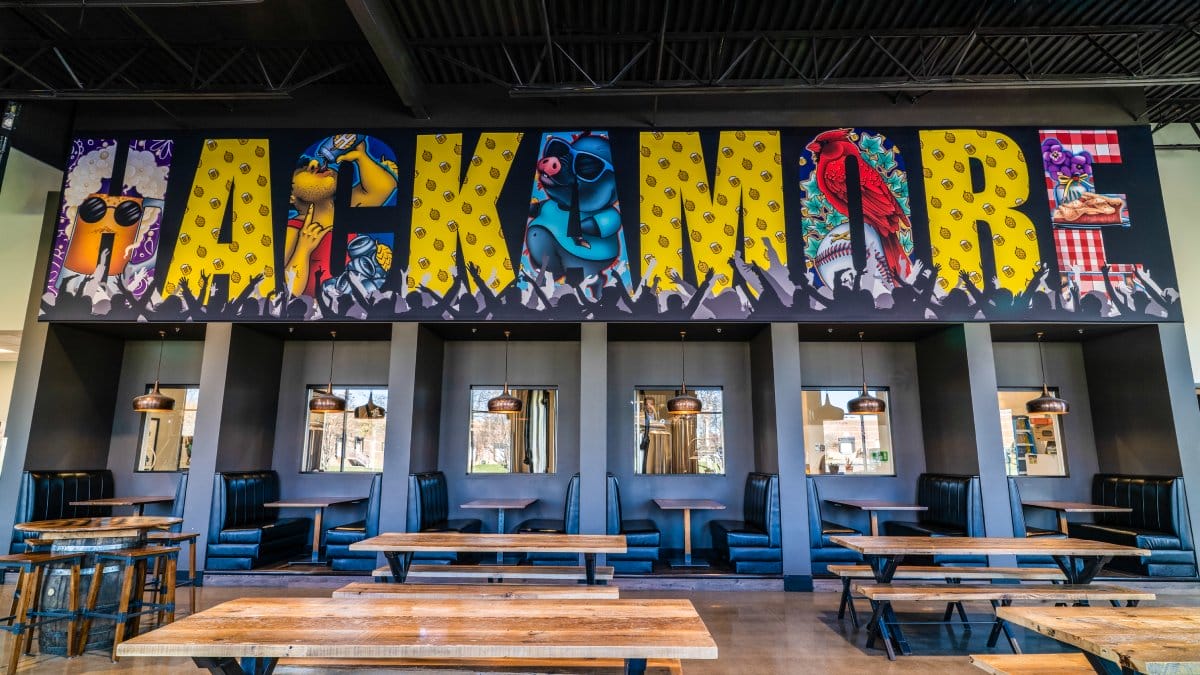
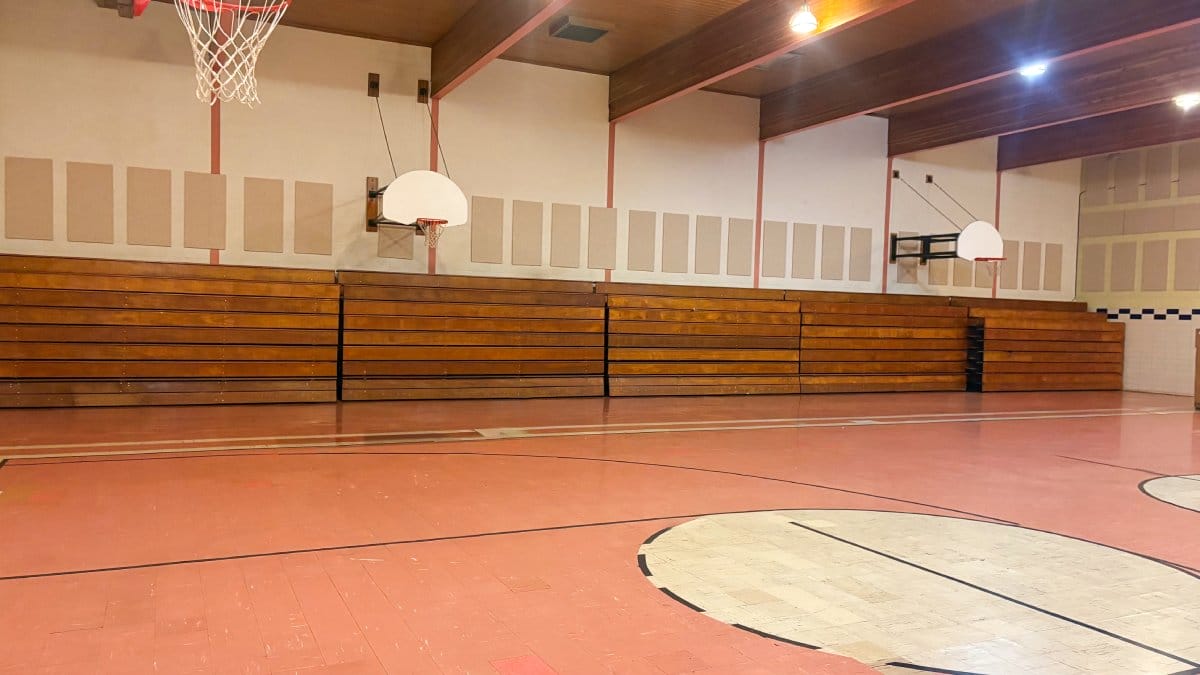
Large-volume spaces such as gyms, restaurants, atriums, and worship spaces present unique acoustical challenges. High ceilings and long reflection paths allow sound energy to build quickly, overwhelming wall-based treatments.
In these environments, fabric wrapped hanging baffles are especially effective because they:
- Increase absorption within the room volume
- Intercept sound before it reaches reflective surfaces
- Perform well in spaces with limited wall area
Baffles are typically installed in evenly spaced rows and suspended below reflective ceilings. For demanding environments like natatoriums or ice rinks, encapsulated PVC or sailcloth baffles are often specified to withstand humidity and temperature extremes.
4. Sharpen Imaging in Home Theaters
Well-designed home theater acoustics rely on clarity, balance, and consistency across seating positions. Fabric-wrapped panels or Curve diffusers are commonly used at first reflection points along side walls and ceilings to improve dialogue clarity and imaging.
To avoid over-absorbing the space, absorption is often paired with diffusion at rear walls or ceilings. This combination improves envelopment while maintaining clarity. FabriSorb panels combined with curved or barrel-style Curve diffusers are a common solution in dedicated theaters.
5. Classrooms & Lecture Halls
In classroom acoustics, reverberation control directly affects comprehension and learning outcomes. Excessive reverberation reduces speech intelligibility, particularly for young students, non-native speakers, and individuals with hearing challenges.
Effective classroom treatments often include:
- Wall-mounted panels near teaching zones
- Ceiling panels over seating areas
- Occasional baffles in larger lecture halls
Together, these treatments reduce reverberation, improve clarity, and support accessibility goals related to speech intelligibility.

6. Retail & Hospitality Spaces
Acoustics in retail and hospitality spaces must balance acoustical performance with visual design. Hard finishes, open layouts, and high occupancy levels often contribute to excessive noise.
Fabric-wrapped panels help reduce clatter and crowd noise while remaining visually discreet. One-inch thick panels work well where space is tight, and custom fabrics allow treatments to align with branding or interior finishes.
Printed fabric can be applied to rigid fiberglass panels or integrated into stretch-fabric systems like WallMate, allowing acoustical treatments to double as artwork or branded design features.
Choosing the Right Format (Panels, Clouds, Baffles, Diffusers)
Choosing the right acoustical format starts with understanding how sound behaves in a given space. Room volume, ceiling height, surface materials, and how people use the room all influence which products will be most effective. In practice, the best results often come from combining formats rather than relying on a single solution.
Wall-mounted panels are typically the most straightforward way to control reflections, particularly in smaller or mid-sized rooms where sound energy bounces between parallel surfaces. They allow for targeted placement at problem areas and are easy to integrate into most interior designs.
Ceiling-based treatments become more important when wall space is limited or when ceilings are highly reflective. Ceiling clouds, in particular, offer absorption without requiring a full drop ceiling and work well in spaces with exposed structure. They are frequently used to supplement wall panels and help create more uniform reverberation control throughout the room.
Acoustic baffles can also help to address excess sound energy building up in tall or open spaces. By suspending absorption within the room volume, baffles help intercept sound before it can reflect repeatedly off hard ceiling surfaces, making them especially useful in large or architecturally open environments.
Diffusers should be selected carefully and only when the room type supports their use. Because diffusion redistributes sound rather than absorbing it, it is most effective in environments where maintaining a sense of spaciousness is desirable and background noise levels are already under control.
- Wall panels are best suited for addressing reflections and improving speech clarity where sound bounces between nearby surfaces.
- Ceiling mounted panels add meaningful absorption in rooms with limited wall space.
- Baffles and clouds perform most effectively in tall or open spaces, where sound energy builds up due to the large cubic volume of the space.
- Diffusers are typically reserved for studios and theaters, where maintaining spatial energy is as important as reducing reflections.
In many projects, mixing two or more of these formats provides better acoustical balance and greater design flexibility than relying on any single treatment type.
Specs that Matter (NRC, Thickness, Fire Rating, Durability)
Acoustical specifications are often reduced to a few headline numbers, but real-world performance depends on how those specs are interpreted and applied. NRC is a useful starting point, but it should be viewed as part of a broader picture rather than a definitive measure of effectiveness.
Thickness plays a significant role in how a panel performs across different frequencies. Thicker panels generally absorb more low- and mid-frequency energy, which is critical for controlling speech-related reverberation. Thinner panels can still be effective, particularly when space or budget is constrained, and work extremely well for typical hallway, classroom, office or restaurant applications – where the goal is to simply “take the edge off” of the room.
Fire performance is another essential consideration, especially in commercial and institutional environments. Products that meet ASTM E84 and achieve Class A fire rated panels status are widely accepted across building types and jurisdictions, making them a safe baseline for specification.
Durability requirements vary by application. In classrooms or collaborative spaces, tackable surfaces may be desirable. In public-facing environments, resistance to wear, ease of cleaning, and long-term appearance become more important. These practical factors often influence product selection just as much as acoustical performance.
- Look for NRC values that are tied to panel thickness, rather than relying on a single averaged number without context.
- Confirm that products meet ASTM E84 Class A fire rated requirements, which are standard across most commercial interiors.
- Consider surface durability and tackability where panels will be used in classrooms, multi-use rooms, or high-contact areas.
Mounting methods also affect both performance and long-term flexibility. Z-clip installation allows panels to sit flush while remaining removable. Impaling clips are often chosen for cost-sensitive, permanent installations. Rotofast mounts offer fast installation and the ability to relocate a panel if needed. Track-based, site-fabricated stretch fabric systems like WallMate are designed for large, continuous surfaces and concealed absorptive cores.
Design & Aesthetics
Fabric-wrapped acoustical products have evolved well beyond purely utilitarian solutions. Today, they are frequently specified as intentional design elements that contribute to the visual identity of a space while quietly improving acoustical performance.
Fabric choice is central to this flexibility. Designers can select colors and textures that either blend seamlessly with surrounding finishes or create contrast and visual interest. Neutral fabrics help panels recede into the architecture, while bold colors or patterns can define zones, highlight circulation paths, or reinforce branding.
Custom printing expands these possibilities further. Graphics, photography, artwork, or brand elements can be printed directly onto acoustically transparent fabric without compromising sound absorption. This makes fabric-wrapped panels especially appealing in offices, schools, retail spaces, and hospitality environments where aesthetics and experience matter.
- Panels are available in a wide range of fabric colors and textures, allowing treatments to blend in or stand out as design elements.
- Custom printed fabrics make it possible to integrate graphics, branding, or artwork directly into the acoustical treatment.
- Seamless stretch-fabric wall and ceiling systems provide large, uninterrupted surfaces with concealed absorptive performance.
Printed fabric can be wrapped around traditional fiberglass core panels or stretched over frames and in front of absorptive cores in systems like WallMate. In both cases, the result is a clean, continuous surface that delivers reverberation control while functioning as part of the overall interior design.
Budgeting & ROI
From a cost perspective, fabric-wrapped acoustical treatments are often one of the most efficient ways to improve how a space functions. They typically require less disruption than structural changes and can be scaled to fit a wide range of budgets.
Most rooms do not need full surface coverage to see meaningful improvements. Strategic placement – particularly at primary reflection points and high-impact surfaces – often delivers the greatest benefit per panel. This approach allows projects to prioritize performance without overbuilding the solution.
Phased installation is another common strategy, especially in retrofit situations. Panels can be added over time as budgets allow, with each phase improving comfort and clarity. Because fabric-wrapped products are modular and durable, they can adapt as spaces evolve.
- Phased installations allow projects to improve acoustics over time while staying within budget constraints.
- Long-term gains often include improved productivity, better learning outcomes, and more comfortable guest experiences.
Over time, the return on investment extends beyond acoustics alone. Improved speech intelligibility supports productivity and learning, while better reverberation control enhances guest experience in hospitality and retail environments. When thoughtfully specified, fabric wrapped acoustic panels become a lasting part of both the room’s performance and its design.
Get a free consultation: Share your room dimensions, photos, and goals, and our team will recommend panel quantities, placement strategies, and appropriate mounting hardware.
Request a quick quote: Receive pricing, lead times, fabric options, and NRC specifications tailored to your space.