

 Acoustical Ceiling Tiles
Using Acoustic Treatments to Maintain HIPAA Compliance
Maintaining patient confidentiality is a foundational responsibility in healthcare, and that responsibility extends beyond digital records and written documentation. The spoken word – conversations between staff and patients – also falls under HIPAA protections. This is where HIPAA soundproofing requirements become a practical concern. While the term “soundproofing” is often used loosely, the real issue is not eliminating sound entirely but managing how speech travels and is understood within a space.
In many healthcare environments, poor acoustics – especially excessive reverberation and unintentional sound paths – can allow conversations to be overheard at reception desks, nurse stations, exam rooms, and pharmacy counters. These are not random, isolated cases. They are everyday conditions that can lead to avoidable exposure of protected health information (PHI). Addressing them requires a thoughtful blend of design, policy, and acoustic treatment.
Why Acoustics Matter for HIPAA
HIPAA is fundamentally about protecting patient information, and that includes communication. The goal is not silence – it’s reducing speech intelligibility for unintended listeners. If someone nearby can clearly understand a private conversation, the environment may not meet expectations for reasonable safeguards.
The HIPAA Privacy Rule calls for administrative, technical, and physical protections. Acoustic treatment falls squarely within physical safeguards, but they also support administrative practices like speaking quietly or relocating sensitive conversations.
Below is a simplified way to think about common risk areas and how acoustics play a role:
| Risky Zone | Typical Acoustic Risk | Recommended Controls |
| Reception & Check-In | Direct line-of-sight speech, high reverberation | Absorption, barriers, queue spacing |
| Nurse Stations | Open layouts, overlapping conversations | Sound masking, localized absorption |
| Exam Rooms | Sound leakage through ceilings and doors | Sealing gaps, higher CAC ceilings |
| Waiting Rooms | Echo amplifying voices across space | Reverberation control in waiting rooms |
| Pharmacies | Close proximity conversations at pickup | Partitions, speech dampening surfaces |
The takeaway is straightforward: better acoustics reduce how far and how clearly speech travels, directly supporting acoustic privacy.
What HIPAA Actually Requires (Not Soundproof Rooms)
A common misconception is that HIPAA mandates fully soundproof rooms. In reality, guidance from the U.S. Department of Health & Human Services makes it clear that this is not the case. Facilities are not required to retrofit spaces into sealed environments. Instead, they must make “reasonable efforts” to prevent inappropriate disclosures.
This distinction matters. A compliant environment balances practicality with protection. For example, reasonable safeguards may include:
- Speaking in lowered voices when discussing sensitive information
- Moving detailed conversations to more private areas when available
- Using privacy screens or spatial separation at check-in points
- Implementing a documented HIPAA soundproofing policy that outlines expectations
Physical upgrades become necessary when these measures are not sufficient on their own. If speech routinely carries into adjacent areas or through building systems, acoustic intervention is warranted.
Where Facilities Fall Short
Many healthcare facilities were not originally designed with modern privacy expectations in mind. As a result, certain architectural and operational conditions tend to create recurring issues.
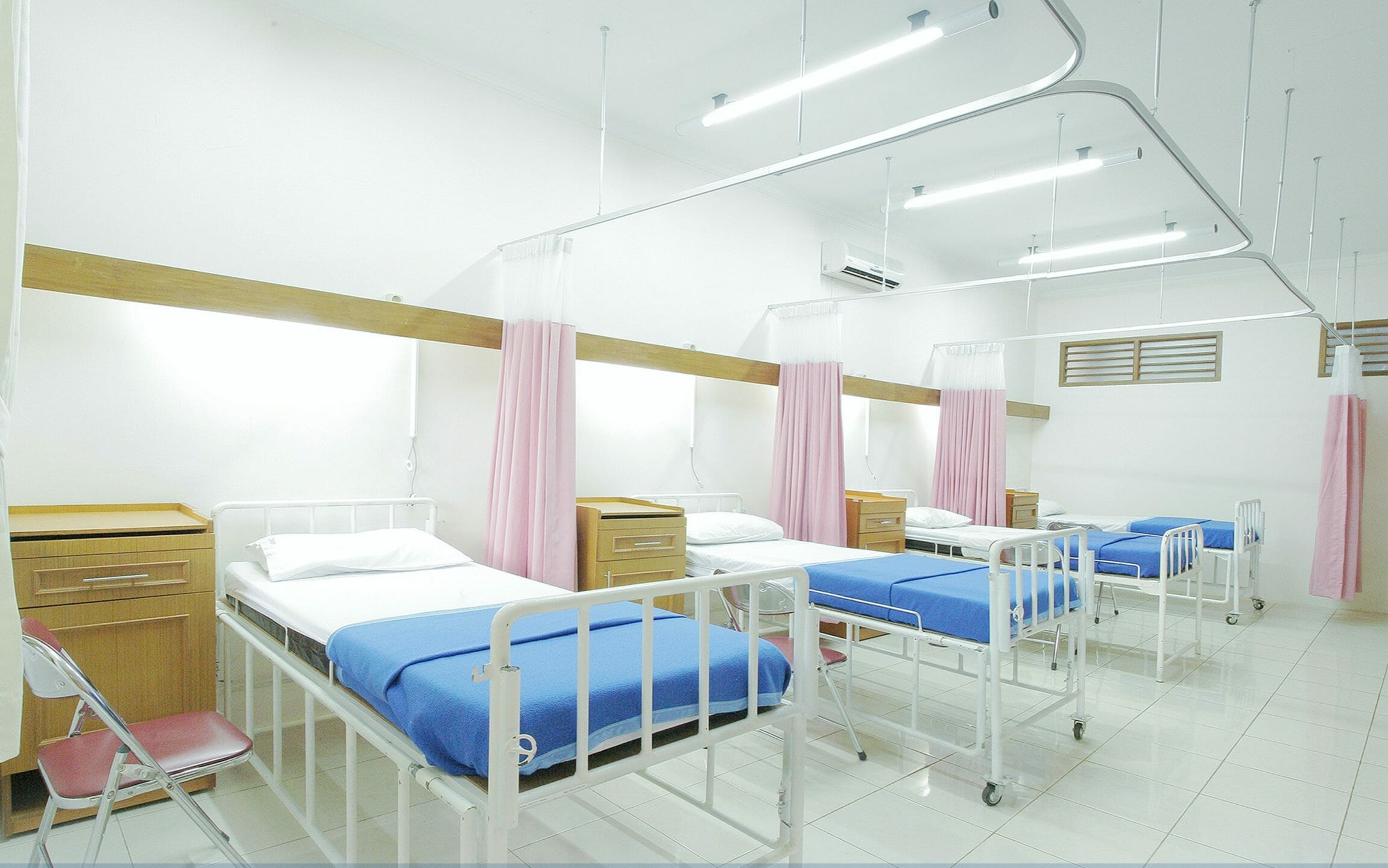
Open check-in counters are one of the most common problem areas. Patients often stand close together, and conversations with staff can be easily overheard. Similarly, corridor-adjacent exam rooms may have adequate walls but incomplete ceiling barriers, allowing sound to travel through shared plenum spaces.
Other frequent challenges include:
- Shared infusion bays where conversations overlap
- Untreated return air openings that transmit sound between rooms
- Hard, reflective surfaces in waiting areas that amplify voices
- Gaps around doors that compromise speech privacy in clinics
- Busy nurse stations where multiple discussions occur simultaneously
Even when walls appear solid, hidden pathways – like ductwork or ceiling cavities – can undermine nurse station privacy and exam room confidentiality.
Acoustic Controls Mapped to HIPAA Safeguards
To effectively support compliance, acoustic solutions should align with HIPAA’s three safeguard categories.
Administrative
Administrative controls focus on behavior and policy. These are often the easiest to implement and can deliver immediate improvements.
- Establish “speak quietly” expectations for staff
- Design queue spacing to create distance between patients
- Use callback procedures instead of calling out names or conditions
- Incorporate acoustic awareness into staff training
These measures set the foundation, but they rely on consistent human behavior to be fully effective.

Technical
Technical solutions include systems that actively manage sound levels. Among the most common are sound masking systems, which introduce a controlled background sound to reduce speech intelligibility.
When properly tuned, sound masking can be effective at nurse stations, reception areas, and in open clinical environments. It works by making conversations less distinct rather than louder. However, it should be implemented carefully and not relied upon as a standalone fix.
Other technical considerations include managing paging volumes and ensuring that overhead announcements do not inadvertently expose sensitive information.
Physical
Physical controls are where most acoustic improvements occur. These solutions directly address how sound reflects, travels, and escapes.
Absorption plays a key role in reducing reverberation. By installing sound absorbing wall panels, medical environments benefit through limiting how far voices carry. This is particularly important for reverberation control in waiting rooms, where echo can amplify even quiet conversations.
Blocking strategies increase the mass and integrity of walls and ceilings. Options include:
- Adding layers of drywall or using a mass loaded vinyl barrier
- Upgrading ceiling systems with higher-rated tiles or acoustic ceiling CAC healthcare backers
- Extending walls fully with a deck-to-deck wall extension
Sealing and isolation are equally important. Even small gaps can significantly reduce performance. Effective measures include:
- Installing exam room door seals
- Sealing penetrations with acoustic sealant
- Using backer boxes for lights and speakers
- Treating duct paths with return air transfer silencers
- Applying vibration isolation to mechanical equipment
- Improving HVAC soundproofing to reduce noise transmission
- Adding window inserts where exterior noise intrusion impacts speech privacy
Together, these physical strategies create a more controlled acoustic environment where speech is less likely to travel unintentionally.
Treatment Playbooks by Space Type
Different areas of a healthcare facility require tailored approaches. Rather than one-size-fits-all solutions, targeted treatment bundles are more effective.
Reception and Check-In
Reception areas benefit from a layered approach. Start by adding wall or ceiling absorption to reduce reflections. Increase ceiling performance with backers where needed, and consider light sound masking in waiting zones. Privacy screens at counters can also help break direct sound paths.
Exam and Consult Rooms
These spaces require stronger isolation. Focus on sealing plenum pathways with backer boxes and lined ductwork. Upgrading ceiling systems or adding backers improves containment. Door gaps should be addressed with gaskets to limit sound leakage and improve overall speech containment between adjacent spaces.
Nurse Stations and Open Clinical Areas
Open layouts demand a balance between communication and privacy. Wall-mounted or ceiling-mounted panels can lower overall reverberation, improving clarity for intended listeners while reducing carryover. Localized barriers and modest sound masking can further support nurse station privacy.
Pharmacies and Pickup Windows
Pharmacy areas often involve sensitive discussions in close proximity. Physical partitions, glass barriers, and thoughtful layout adjustments help reduce pharmacy counseling privacy risks. Even small design tweaks can significantly lower speech transmission.

How to Verify You’re Meeting “Reasonable Safeguards”
Compliance is not just about installing products – it’s about demonstrating effectiveness. Fortunately, verification can be practical and straightforward.
One of the simplest methods is an intelligibility spot check. Stand 6-10 feet away from a conversation and determine whether key phrases can be clearly understood. If they can, additional controls may be needed.
Reverberation can also be assessed informally. Spaces with noticeable echo or prolonged sound decay likely need more absorption. Addressing this improves both privacy and overall comfort.
A basic audit should include:
- Checking plenum paths, including return grilles and ceiling penetrations
- Reviewing door and wall integrity
- Gathering staff feedback on privacy concerns
- Documenting training and policy enforcement
The goal is not perfect silence. HIPAA emphasizes reasonable protection, meaning that incidental disclosures may still occur, but should be minimized through good-faith efforts.
Budget Tiers and Fast Wins
Acoustic improvements can be scaled to fit different budgets. The key is prioritizing the most impactful changes first.
Good
Focus on adding absorption in key areas, installing door seal kits, and reinforcing administrative practices. These steps often deliver noticeable improvements quickly.
Better
Expand with targeted plenum sealing in offices and common areas and localized sound masking. Address known problem areas rather than applying solutions uniformly.
Best
Implement comprehensive upgrades, including added wall mass, improving and upgrading ceiling systems, and treated ductwork. This level provides the strongest support for consistent privacy across the facility.
Each tier builds on the previous one, allowing facilities to phase improvements over time while still making progress toward compliance.
Compliance Alignment and Documentation
Acoustic measures should be integrated into the broader HIPAA program rather than treated as standalone fixes. This starts with documentation.
Include acoustic strategies within your physical safeguards section, referencing your HIPAA soundproofing policy. Maintain records of installed treatments, including photos and specifications. If sound masking is used, document commissioning notes and tuning details.
Training logs should reflect that staff understand both behavioral and environmental components of privacy. This reinforces that compliance is a shared responsibility.
Linking these efforts back to official guidance on incidental disclosures and reasonable safeguards helps demonstrate intent and diligence during audits.
FAQ
Do we need soundproof rooms?
No. HIPAA does not require fully soundproof spaces. Instead, it calls for reasonable safeguards to reduce the likelihood of inappropriate disclosures. In most cases, a combination of administrative practices and targeted acoustic treatments is sufficient to meet expectations.
Is sound masking allowed?
Yes, and it is commonly used in healthcare settings. Properly designed sound masking systems can reduce speech intelligibility, particularly in open areas like reception desks and nurse stations. However, they should be part of a broader strategy rather than the only solution.
Are reception areas HIPAA risks?
Absolutely. Reception and check-in spaces are among the most common sources of incidental disclosures. Designing for privacy – through layout, absorption, and operational practices – is essential to maintaining compliance.
Final Thoughts
Acoustic design plays a larger role in patient privacy than many facilities initially realize. By addressing how sound behaves within a space, healthcare providers can significantly reduce the risk of overheard conversations and strengthen their overall compliance posture.
The key is understanding that HIPAA soundproofing requirements are not about achieving silence – they are about implementing thoughtful, effective safeguards. When acoustic treatments are combined with clear policies and staff awareness, facilities can create environments that protect patient information while still supporting efficient care delivery. For organizations evaluating the next steps, working with experienced partners like Acoustical Surfaces can help translate these requirements into practical, facility-specific solutions that are both effective and scalable.
1 Comment
Ciyex
Interesting article! It’s helpful to see HIPAA compliance considered from a physical environment perspective, especially when conversations involving protected health information can be overheard. Acoustic treatments can be an important part of creating more privacy-conscious healthcare spaces when combined with appropriate administrative and technical safeguards. Thanks for sharing this practical perspective!