

 Acoustical Ceiling Tiles
Conference Room Acoustics: How to Design Meeting Spaces People Can Actually Hear In
A conference room can look polished, feature the latest AV technology, and still make conversations harder than they should be. Excessive glass, exposed ceilings, hard finishes, and poor room layouts can all negatively impact conference room acoustics, making it difficult for people at the table – and those joining remotely – to understand what’s being said. While better microphones and speakers can help, they can’t overcome a room that constantly reflects sound.
Conference room acoustics describe how sound behaves inside a meeting space, including echo, reverberation, speech clarity, background noise, and audio quality. Designing for clear communication means controlling those factors from the beginning rather than trying to solve them after the room is finished.
What Are Conference Room Acoustics?
Conference room acoustics refer to the way sound moves, reflects, is absorbed, and gradually decays inside a meeting space. Good meeting room acoustics keep voices clear throughout the room while minimizing distractions like lingering reflections and background noise.
Every design decision influences how sound behaves inside a room, from ceiling height and room proportions to finish materials, glass, furnishings, and HVAC systems. When those elements work together, we create room acoustics for speech that support comfortable conversations instead of competing with them.
Why Conference Rooms Echo
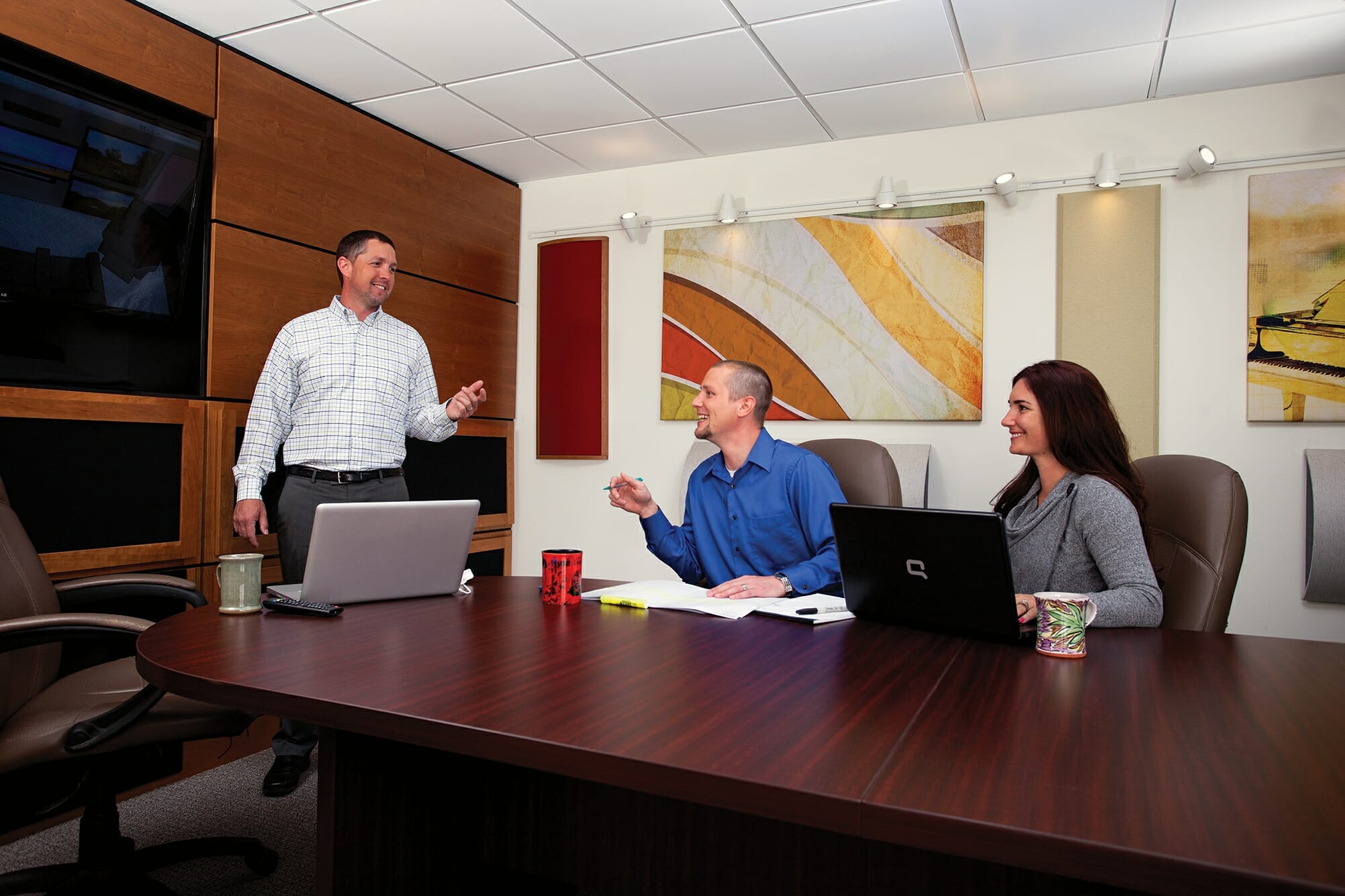
Many modern conference rooms are filled with reflective surfaces. Glass walls, painted drywall, concrete floors, hard ceilings, large conference tables, and exposed structural elements all reflect speech instead of absorbing it. When enough reflective surfaces are present, conference room sound continues bouncing around the space even after someone finishes speaking.
That’s why open, contemporary meeting rooms frequently experience conference room echo and excessive conference room reverberation. Parallel walls can make reflections even more noticeable, while rooms with very little absorption allow speech to linger longer than it should.
For a deeper look at echo and reverberation control, see our guide on sound diffusion and absorption.
Echo vs. Reverberation
Although they’re often used interchangeably, echo and reverberation are different acoustic phenomena.
An echo is a distinct reflected sound that arrives late enough to be heard separately from the original voice. Reverberation is the continuous buildup and gradual decay of many overlapping reflections. In most conference rooms, reverberation – not a single audible echo – is what makes conversations sound muddy and difficult to follow.
Common Conference Room Acoustic Problems
Poor conference room acoustics affect more than overall sound quality. They directly influence how well people communicate during meetings.
Common problems include:
- Excessive echo and reverberation
- Reduced speech clarity
- Uneven sound throughout the space
- HVAC and occupant noise that interferes with conversations
- Limited speech privacy outside the room
- Poor audio for remote meeting participants
Many of these issues can be avoided by considering modern conference room acoustics early in the design process instead of relying on AV equipment to compensate afterward.
Conference Room Acoustics vs. Soundproofing
Acoustic treatment and soundproofing solve different problems.
Conference room acoustic treatment improves the listening environment inside the room by reducing reflections and improving meeting room sound control through better sound absorption and reverberation control.
Conference room soundproofing, on the other hand, limits sound traveling through walls, windows, ceilings, doors, ductwork, and other construction paths. It focuses on sound isolation rather than improving the room’s internal acoustics.
Understanding the soundproofing vs. sound absorption distinction helps project teams select solutions that match the problem they’re trying to solve.
How Reverberation Affects Speech Clarity
A long reverberation time (RT60) does more than make a room sound noisy – it makes conversations harder to follow. As reflections linger, words begin to overlap with the next speaker, reducing speech intelligibility in meeting rooms and other gathering spaces. People naturally start repeating themselves, speaking louder, or asking others to slow down, making meetings more tiring than they need to be.
The problem becomes even more noticeable during presentations and fast-paced discussions where participants frequently interrupt or build on one another’s ideas. Instead of hearing crisp, distinct words, listeners hear a blend of direct speech and delayed reflections competing for attention.
Reducing reverberation improves communication for everyone in the room. If you’d like to learn more about measuring RT60 or techniques for improving speech intelligibility, our related guides explain how reverberation time influences speech performance.
How Walls, Ceilings, Floors, and Glass Affect Sound
Every surface in a conference room contributes to its acoustic performance. Hard, smooth materials tend to reflect sound, while absorptive materials help reduce reflections and shorten reverberation.
Glass is often the biggest challenge because it reflects nearly all speech frequencies. Painted drywall, concrete, and large conference tables also contribute to reflections, while exposed ceilings can create another expansive reflective surface overhead. Carpet, upholstered seating, and other furnishings provide some absorption, but they’re rarely enough to control reverberation on their own.
That’s why effective meeting room noise control typically relies on purpose-built acoustic materials rather than expecting finish selections or furniture to solve the problem. Reducing the strongest reflections creates a more balanced, comfortable listening environment.
Are Wall or Ceiling Treatments Better?
There’s no universal answer. The best location for acoustic treatment for meeting rooms depends on the room’s size, ceiling height, windows, available wall space, lighting layout, AV equipment, and architectural goals.
Many conference rooms – especially larger spaces where boardroom acoustics are a priority – benefit from a combination of wall and ceiling treatments, with each surface addressing different reflection paths.
Acoustic Wall Treatments
Acoustic wall treatments like fabric-wrapped acoustic panels are especially effective at controlling early reflections for better echo control. Because these reflections reach listeners quickly after the direct sound, reducing them can significantly improve speech clarity in conference rooms while minimizing distracting echoes.
Wall-mounted acoustic wall panels are often one of the most efficient ways to improve conference room performance, particularly in spaces with large uninterrupted wall surfaces.

Acoustic Ceiling Treatments
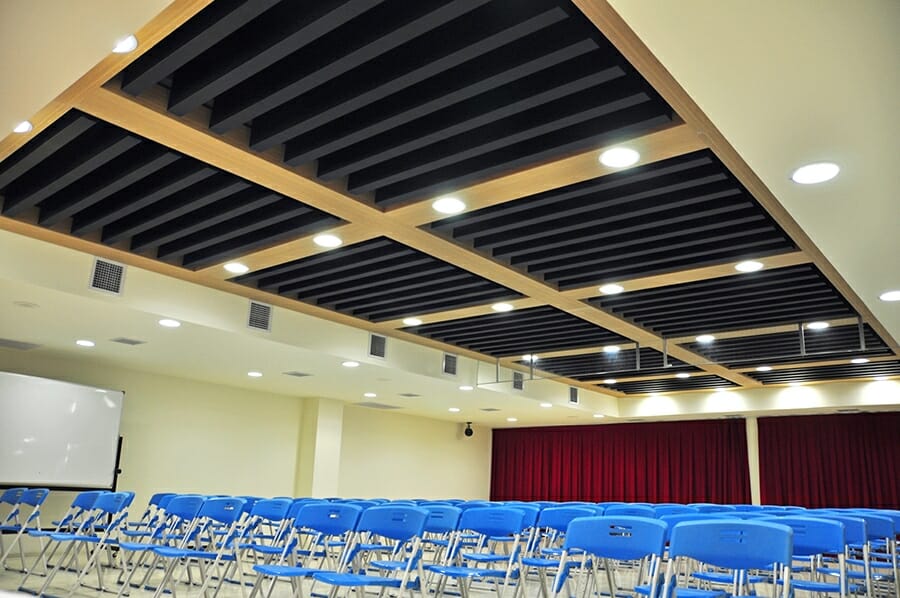
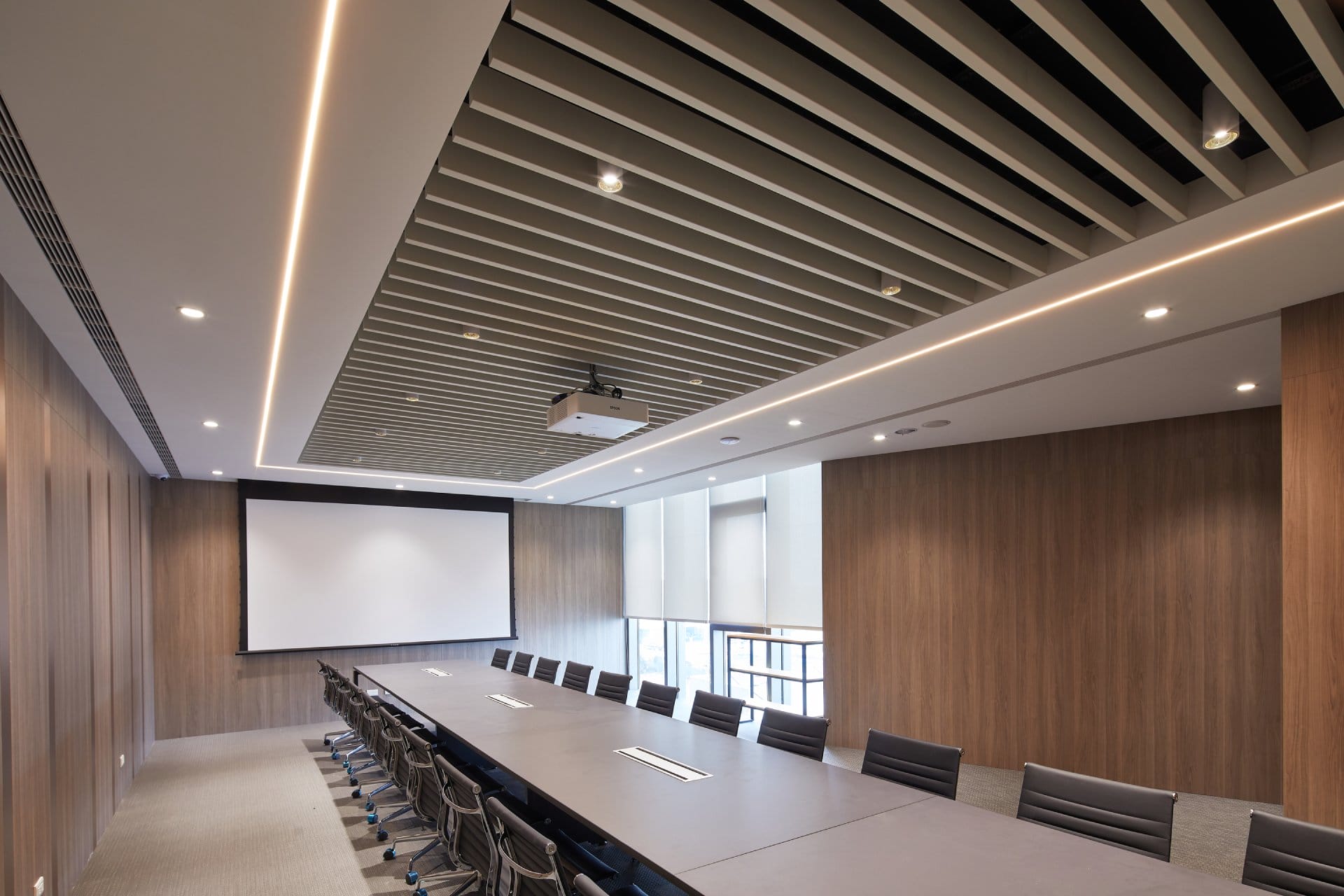
When wall space is limited – or most of the walls are glass – acoustic ceiling treatments often provide the greatest benefit. Suspended ceiling clouds, acoustic ceiling tiles, and other overhead absorptive systems reduce reflections from one of the largest uninterrupted surfaces in the room without competing for valuable wall space.
Ceiling treatments are particularly common in rooms with exterior windows, interior glass partitions, or open architectural ceilings where vertical surfaces provide little opportunity for absorption.
Acoustic Backers
Perforated, slotted, and other open architectural ceiling and wall systems frequently rely on acoustic backers to provide meaningful absorption. Installed behind the finished surface, these backers improve acoustic performance while allowing designers to preserve the desired appearance of wood, metal, or other architectural finishes.
Conference Room Acoustics for Hybrid Meetings
Clear communication becomes even more important when some participants join remotely. Microphones don’t distinguish between direct speech and reflected sound, so excessive reverberation, HVAC noise, chair movement, and overlapping conversations can all reduce conference room audio quality for remote listeners.
Designing for hybrid meeting room acoustics means creating a room where both in-person and remote participants hear conversations clearly. Controlling reflections and background noise before selecting microphones or speakers gives every part of the AV system a stronger foundation.
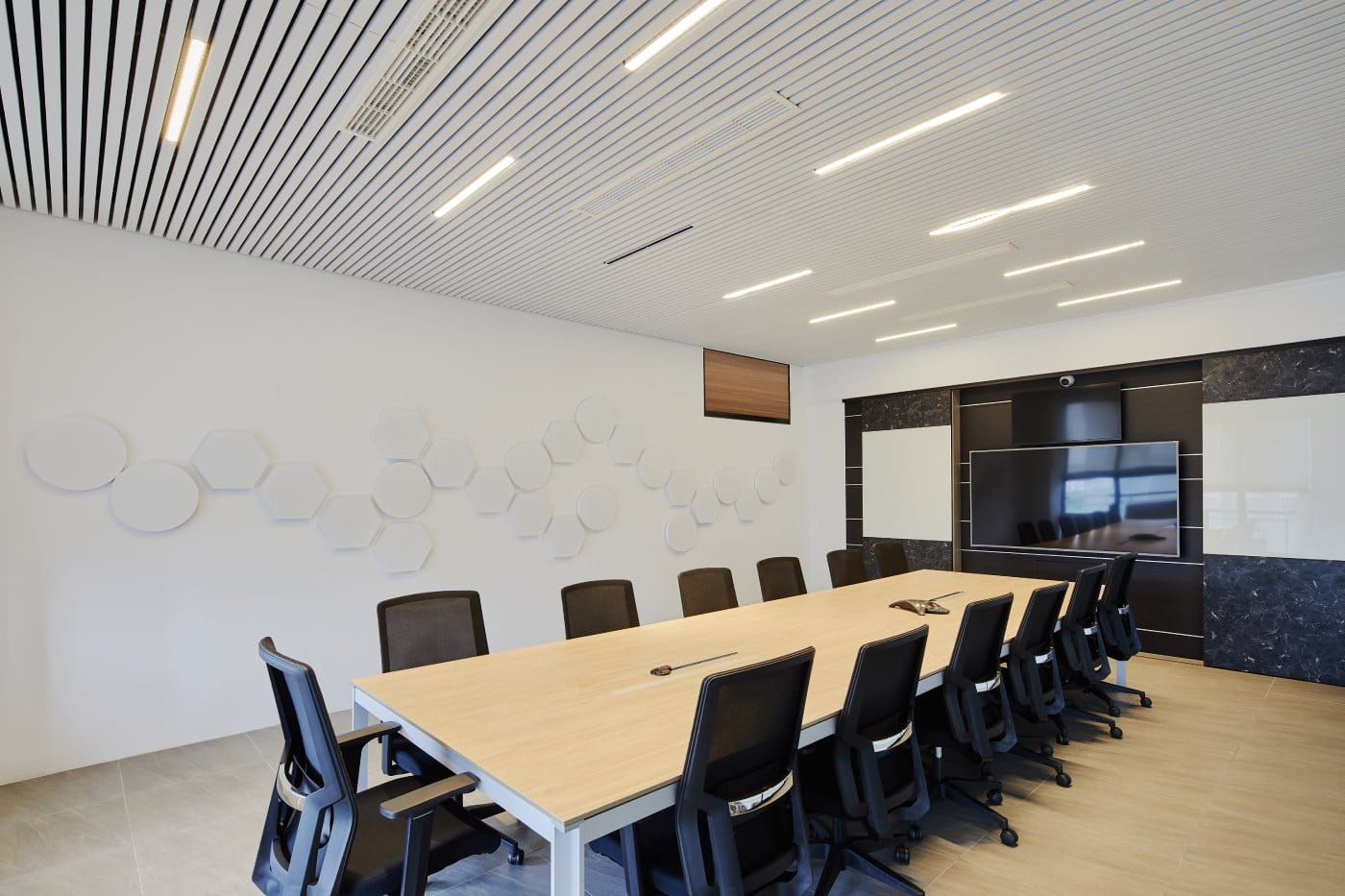
Coordinate Acoustics with AV Design
Acoustics and AV systems work best when they’re planned together. Microphones, speakers, displays, cameras, lighting, HVAC systems, and acoustic treatments all influence how well a meeting room performs.
Rather than expecting technology to correct poor acoustics, design the room so speech is naturally clear. Well-coordinated office meeting room acoustics improve both in-room conversations and the experience for remote participants.
How Much Acoustic Treatment Does a Conference Room Need?
There’s no standard amount of treatment that works for every conference room. The right solution depends on room volume, ceiling height, the amount of glass, occupancy, meeting styles, background noise, reverberation targets, and the overall AV design.
Proper conference room acoustic treatment focuses on placing absorption where it has the greatest impact instead of simply covering as much surface area as possible. For a closer look at how many acoustic panels are needed for your project, consider the room’s size, finishes, and performance goals together.
Conference Room Acoustic Design Checklist
Successful conference rooms typically follow the same design principles:
- Define how the room will be used.
- Identify the largest reflective surfaces.
- Establish reverberation and speech performance goals.
- Coordinate acoustic treatments with the AV layout.
- Address background noise and speech privacy.
- Verify performance after installation.
Our acoustic performance checklist explores these considerations in greater detail.
How Acoustical Surfaces Supports Conference Room Acoustic Design
Acoustical Surfaces helps architects and designers create conference rooms that balance aesthetics with acoustic performance. From acoustic wall panels and ceiling systems to architectural wood and metal solutions with acoustic backers, our products help architects create clearer communication without compromising the finished design.
Whether you’re planning a small meeting room or a large boardroom, our office and conference room acoustic treatments can be integrated into the overall design to improve communication while complementing the finished space.
Better Conference Room Acoustics Start With Better Design
Effective conference room acoustics begin long before the first meeting takes place. By controlling reflections, improving speech clarity, coordinating acoustic treatments with AV systems, and addressing sound isolation where needed, designers can create meeting spaces that support clear communication for everyone in the room and everyone joining remotely.
The most successful conference rooms don’t rely on technology to overcome poor acoustics. They combine thoughtful design, appropriate sound absorption, and the right architectural systems to create spaces where people can focus on the conversation instead of struggling to hear it.

FAQs
What are conference room acoustics?
Conference room acoustics describe how sound behaves inside a meeting space. They include speech clarity, echo, reverberation, background noise, and overall audio quality. Good conference room acoustics make conversations easier to understand for both in-person and remote participants.
How can I improve conference room acoustics?
Start by reducing reflections from hard surfaces with acoustic wall or ceiling treatments. Improving sound absorption, controlling background noise, coordinating acoustics with the AV system, and addressing excessive reverberation will usually have a much greater impact than upgrading microphones or speakers alone.
What causes echo in conference rooms?
Echo or excessive reverberation are typically caused by large reflective surfaces such as glass, drywall, concrete, hard ceilings, and conference tables. Rooms with little sound absorption allow speech to continue reflecting after someone finishes talking, reducing clarity.
What is the difference between echo and reverberation?
An echo is a distinct, reflected sound that’s heard separately from the original voice. Reverberation is the buildup and gradual decay of many overlapping reflections. In most conference rooms, excessive reverberation has a greater impact on communication clarity than a single audible echo.
Are wall or ceiling treatments better for conference rooms?
It depends on the room. Acoustic wall treatments work well when there is sufficient wall space to control early reflections, while ceiling treatments are often the better choice when walls are primarily glass or architectural constraints limit available wall space. Many conference rooms achieve the best results by combining both.
Is acoustic treatment the same as soundproofing?
No. Acoustic treatment improves sound quality inside a room by reducing reflections and reverberation. Soundproofing reduces the amount of sound that travels through walls, ceilings, doors, windows, and other parts of the building.
How do acoustics affect hybrid meetings?
Remote participants hear everything the room’s microphones capture, including reverberation, HVAC noise, chair movement, and overlapping conversations. Improving the room’s acoustics helps create clearer audio for everyone, not just the people sitting at the table.
How much acoustic treatment does a conference room need?
The right amount depends on factors like room size, ceiling height, the amount of glass, occupancy, meeting style, reverberation targets, and the overall AV design. Treatment should be placed where it will have the greatest impact rather than applied uniformly throughout the room.
Does carpet improve conference room acoustics?
Carpet helps absorb some sound, particularly at higher frequencies, but it rarely provides enough absorption to control reverberation by itself. Most conference rooms benefit from dedicated acoustic wall or ceiling treatments in addition to carpet and furnishings.
Can microphones fix poor room acoustics?
No. Better microphones can improve voice pickup, but they also capture reverberation and background noise. The best results come from combining quality AV equipment with good room acoustics.
How can conference room privacy be improved?
Improving privacy usually requires sound isolation rather than acoustic treatment. Better wall construction, sealed doors, quality windows, and careful attention to HVAC penetrations all help reduce sound transmission between spaces. Conference room soundproof doors can also improve privacy when they’re part of a properly designed sound isolation assembly.
What RT60 is appropriate for a conference room?
The ideal RT60 depends on the room’s size and intended use, but conference rooms generally perform best with relatively short reverberation times that support clear speech. Acoustic testing or modeling can help establish an appropriate target for a specific space.