

 Acoustical Ceiling Tiles
The Role of Acoustics in Wellness and Mental Health
Most people notice poor acoustics long before they think about why a space feels uncomfortable. A noisy office makes it harder to concentrate, a classroom with too much echo leaves students struggling to hear, and constant background noise can make restaurants, healthcare facilities, or apartment buildings feel more stressful than they should. Acoustics and wellness are closely connected because the sounds people experience throughout the day influence how easily they can communicate, focus, relax, and recover.
Good acoustic design can’t treat mental health conditions, but it can reduce environmental stressors that contribute to distraction, fatigue, and frustration. Whether you’re designing a workplace, school, healthcare facility, or public space, controlling sound helps create environments that are easier to use and more comfortable to occupy.
Why Sound Has Such a Strong Effect on Wellbeing
People use sound constantly, even when they aren’t thinking about it. It helps them follow conversations, notice potential hazards, judge whether a room feels calm or chaotic, and stay connected to what’s happening around them. The brain is constantly deciding which sounds deserve attention and which can safely fade into the background. That’s one reason understanding how people perceive sound differently than measurements suggest matters when designing buildings. Two rooms with similar decibel readings can create very different experiences depending on how sound reflects, whether background noise is predictable, and how easily people can understand speech.
Research into noise and mental health continues to show that chronic noise can increase stress, interfere with concentration, and make everyday environments more mentally demanding. Creating acoustic comfort isn’t about eliminating every sound. It’s about reducing unnecessary distractions so people can focus on the sounds that matter.
Noise, Stress, and Mental Load
Unexpected conversations, ringing phones, HVAC equipment, and nearby activity all compete for attention. Over time, these interruptions can contribute to workplace noise stress, increase mental fatigue, and make routine tasks more difficult.
Many of the documented noise pollution health effects stem from prolonged exposure rather than a single loud event. When distracting sounds become part of the background, people may spend more effort filtering them out instead of concentrating on work, learning, or conversation.

Why Some People Are More Sound-Sensitive
Acoustics for neurodiverse individuals has become an increasingly important consideration in schools, workplaces, healthcare facilities, and other shared environments. People with autism, ADHD, sensory processing differences, and other forms of neurodiversity may be more affected by distracting or unpredictable sounds than others. Children, older adults, patients, students, and people performing complex cognitive work can also benefit from quieter, more predictable environments.
Many of these sound-sensitive environments place a premium on reducing unnecessary distractions without eliminating the sounds people rely on every day. As a result, neurodiversity and acoustics have become an increasingly important part of conversations about inclusive building design.
Thoughtful acoustic design doesn’t create identical experiences for every occupant, but it can reduce unnecessary distractions and make spaces more accessible for a wider range of users.
Common Sound Problems That Disturb People
Many acoustic complaints stem from familiar problems that people experience every day rather than obvious construction defects.
Echo and Reverberation
A conference room with glass walls, polished floors, and an exposed ceiling may not seem especially loud when it’s empty. Once people begin talking, however, sound bounces off those hard surfaces, making conversations less distinct and the room noticeably more chaotic.
As those reflections build, conversations become harder to follow, footsteps sound sharper, and the room begins to feel louder than it actually is. Good reverberation control helps reduce this buildup, improving speech intelligibility and making shared spaces feel calmer.

Speech Distraction and Lack of Privacy
Open offices, conference rooms, schools, healthcare facilities, and counseling spaces all depend on communication. They also struggle when conversations carry farther than intended.
Improving office privacy acoustics may involve absorptive finishes, partitions, or sound masking systems, depending on whether the goal is reducing distractions, improving confidentiality, or both. Understanding sound masking vs acoustic treatment also helps ensure the right solution is chosen for the problem.
Outside Noise
Traffic, aircraft, construction, and neighborhood noise can interrupt work, rest, and recovery when those sounds enter through walls, windows, or doors. Understanding soundproofing vs sound absorption is important here. Absorptive products improve conditions inside a room, while soundproofing materials help reduce sound transfer from outside. The farther unwanted sound travels into a building, the more difficult it becomes to create spaces that support concentration, privacy, rest, or recovery.
Mechanical and Low-Frequency Noise
Mechanical systems operate continuously, making them easy to overlook until they become distracting. HVAC equipment, plumbing, elevators, and vibrations from nearby machinery can introduce low-frequency noise that contributes to long-term discomfort. Addressing these issues early supports building acoustics and wellbeing by helping mechanical systems fade into the background instead of competing for people’s attention.
What Areas Can You Treat to Tame Disturbing Noise
The right treatment depends on where unwanted sound is coming from and how it behaves once it enters the room.
Walls
Walls provide some of the largest uninterrupted surfaces available for acoustic treatment. Sound absorption panels, decorative absorbers, and durable wall and ceiling sound panels reduce reflections while complementing the design of offices, schools, hospitality spaces, and public buildings. Because walls make up such a large percentage of a room’s exposed surfaces, treating even a portion of them can noticeably improve acoustic comfort without requiring major renovation.
Ceilings
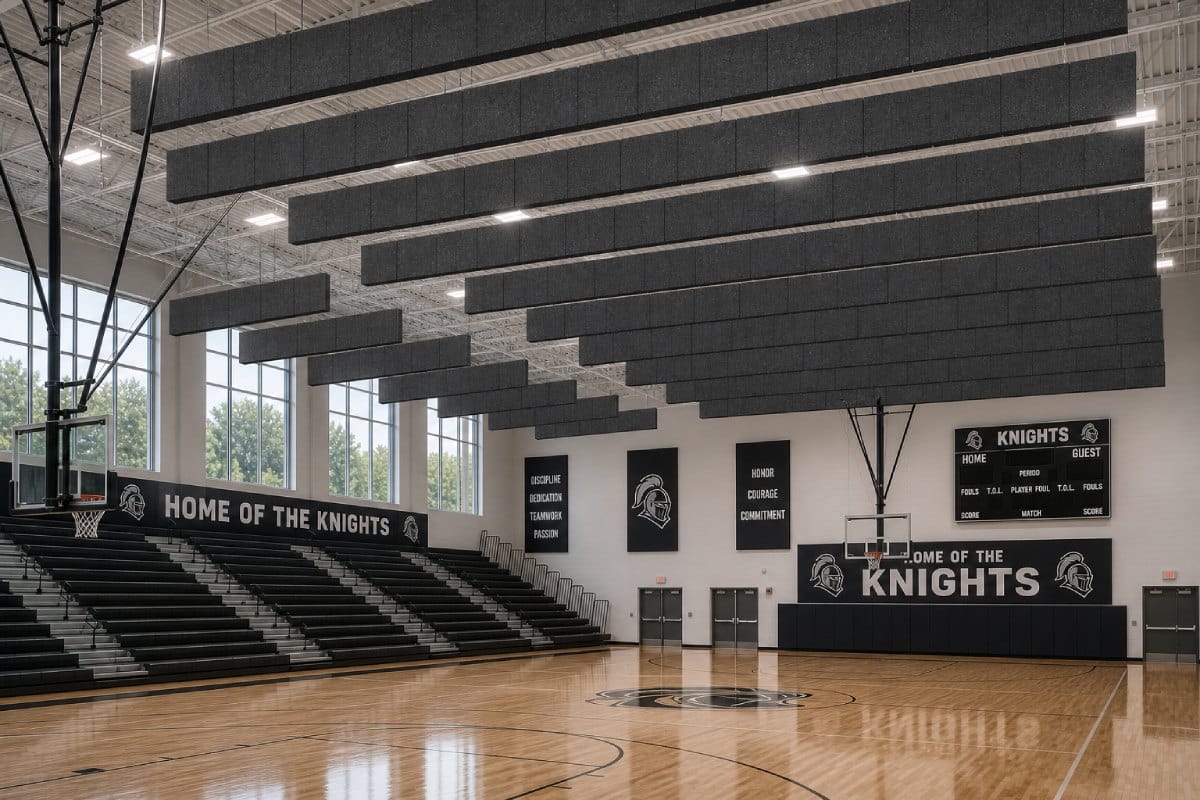
Ceilings are frequently the most effective place to improve room acoustics, especially in larger open spaces. Acoustic ceiling tiles, clouds, baffles, and sound-absorbing ceiling tiles help manage reflection without taking up usable floor space. They are widely used in offices, classrooms, restaurants, and healthcare acoustics projects where controlling background noise improves communication. They also provide an effective option in rooms where windows, cabinetry, displays, or other features leave little wall space available for treatment.
Floors and Impact Paths
Footsteps, moving furniture, exercise equipment, and building vibration can all travel through structural assemblies. In offices, apartments, gyms, and mixed-use buildings, reducing impact noise can make adjacent spaces feel noticeably quieter without changing the activity itself. Underlayments, isolation products, and other noise control solutions help reduce impact noise before it reaches neighboring rooms.
Doors, Windows, and Gaps
Even well-designed walls lose effectiveness if sound escapes through openings. Door seals, acoustical doors, window inserts, acoustical caulk, and soundproof blankets and barriers can all help reduce sound transmission where leaks occur. Treating these weak points is especially important when privacy or outside noise is the primary concern.
Open Areas and Shared Workspaces
Large collaborative environments benefit from a combination of absorptive treatments, partitions, ceiling systems, and carefully planned layouts. Depending on the space, acoustic treatment for offices and sound masking may work together to reduce distractions without making the environment feel isolated. Small layout changes combined with targeted acoustic treatment frequently produce better results than relying on a single product throughout the space.
Acoustic Design Strategies for Healthier Spaces
Choosing the right treatment starts with identifying what’s creating the noise in the first place.
Reduce Reflections
Absorptive finishes reduce the number of sound reflections competing with direct speech. As reflected sound decreases, conversations become easier to follow and spaces generally feel less mentally demanding.

Improve Speech Clarity
Reducing reverberation allows conversations, presentations, and classroom instruction to remain clear without requiring people to raise their voices. As a result, classroom acoustics, quiet library design, and noise reduction in hospitals all prioritize controlling reflected sound.
Improve Privacy
Privacy depends on limiting how easily conversations travel. A combination of absorptive finishes, barriers, seals, and sound masking can reduce distractions while helping occupants feel more comfortable discussing sensitive information. Better speech privacy reduces the tendency for people to raise their voices, keeping conversations from spreading throughout the room.
Block Intrusive Noise
When sound is entering from outside the room, isolation becomes the priority. Appropriate construction details and soundproofing products help prevent unwanted noise from reaching interior spaces, while absorptive treatments improve conditions after the sound is inside. Identifying where the sound is entering before choosing products helps ensure the solution addresses the source of the problem instead of just redirecting its effects inside the room.
Better Acoustics Are Part of Better Design
Every building has its own acoustic environment. The question is whether that environment supports the people using the space or creates unnecessary distractions throughout the day.
Designing for acoustics and wellness means looking beyond decibel levels to the way people actually experience a space. Reducing echo, improving speech clarity, limiting unwanted noise, and protecting privacy all contribute to environments that support focus, comfort, and everyday wellbeing. Whether you’re looking to reduce noise stress, improve office acoustics, plan acoustic design for comfort, or explore acoustics for neurodiverse individuals, thoughtful acoustic design creates spaces that people can use more comfortably every day.
If you’re planning a new construction project or upgrading an existing space, contact Acoustical Surfaces for help selecting acoustic treatments that fit your building, performance goals, and budget.