

 Acoustical Ceiling Tiles
Psychoacoustics: How We Perceive Sound vs. How It’s Measured
Most people describe sound by how it feels. The room is too loud. That hum is irritating. A conversation across the office is impossible to ignore. This conference room sounds harsh, even though no one is shouting. Psychoacoustics helps explain why those experiences do not always match the numbers on a meter.
That doesn’t mean measurements are unimportant. The decibel scale, NRC rating, STC rating, reverberation time, and frequency response all help describe what sound is doing. But they don’t always explain how people experience sound in real spaces. Good acoustic design uses measurements as tools, then connects those tools to comfort, clarity, privacy, and the way people actually use the space.
What is Psychoacoustics?
Psychoacoustics is the study of how humans perceive sound. It looks at the relationship between physical sound energy and human response, including perceived loudness, distraction, annoyance, comfort, and clarity. Sound measurement and sound perception are connected, though they do not always point to the same conclusion.
A sound can measure one way and feel another way because the ear and brain do more than simply register pressure changes. They respond to pitch, timing, meaning, and control. A tone that’s easy to ignore in one setting may become irritating in another. A sound that measures as quiet can still be distracting if it contains speech, vibration, or a sharp high-frequency edge.
That gap matters in room acoustics because people rarely judge a space by a single number. They judge it by whether they can focus, understand speech, hold a private conversation, or work without straining.
Why Two Sounds at the Same dB Can Feel Different
Two sounds can register at the same decibel (dB) level but create very different reactions. A steady fan may fade into the background, while a nearby conversation may be hard to ignore because the brain keeps trying to decode the words.
That’s why human hearing and noise cannot be reduced to loudness alone. Frequency, pattern, and meaning shape how sound is experienced.
The Sound Measurements People See Most Often
Acoustic measurements help identify what kind of sound problem a space has. Some measurements describe level. Others help explain whether sound is being absorbed, reflected, transferred, or shaped by frequency. For readers comparing a product page, test report, or acoustical glossary, it helps to know what each number can and cannot tell you.
Each metric is most useful when it matches the question being asked. How sound is measured depends on whether the issue is loudness, echo, sound transfer, speech privacy, or tonal discomfort.
Decibels: How Loud Is It?
Decibels describe sound level. In basic terms, they help answer the question, “How loud is this?” Sound level measurement devices can capture the pressure level of sound in a space and give designers, facility managers, or property owners a baseline for comparison.
But the decibel scale doesn’t tell the whole story. Human ears do not respond to all frequencies equally, and perceived loudness can shift depending on tone, background noise, and duration. A sound may not be extremely high on the decibel scale but can still feel disruptive if it’s sharp, irregular, or meaningful to the listener.
STC and NRC and STC: Soundproofing vs Sound Absorption
Before comparing NRC and STC and NRC, it helps to separate soundproofing vs sound absorption. Absorptive materials help control reflections inside a space, while soundproofing materials help reduce transmission between spaces. A room may need one, the other, or both, depending on where the sound problem starts.
NRC: How Much Sound Gets Absorbed
An NRC rating helps describe how much sound a material absorbs. It’s most useful when the problem is echo, buildup, or harshness inside a room. Materials with stronger sound absorption reduce reflections, making a room feel calmer and speech easier to understand.
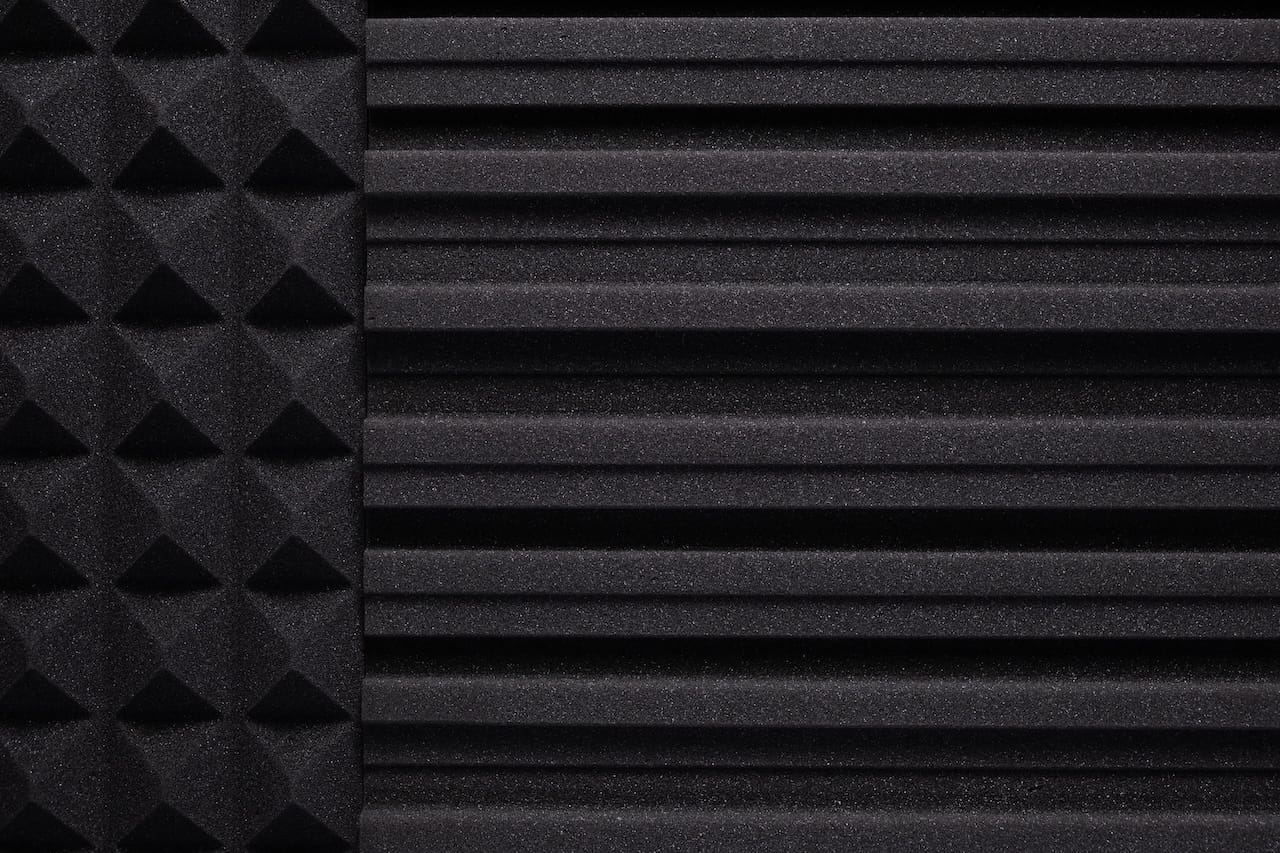
This is where products like wall and ceiling sound panels or sound-absorbing ceiling tiles can help. NRC is not a soundproofing number. It doesn’t tell you how much sound is blocked from entering or leaving a room. It helps explain how a material manages reflected sound inside the room.
STC: How Much Sound Gets Blocked
An STC rating helps describe how well a wall, door, window, or assembly reduces airborne sound transfer. It’s useful when the problem is sound passing from one space to another, such as voices traveling through a wall or noise moving between offices. In practical terms, a higher STC rating generally means the assembly reduces more airborne sound before it reaches the other side.
Reverberation Time: How Long Sound Lingers
Reverberation time describes how long sound continues to reflect after the source stops. A room with a long reverberation time may feel louder or more chaotic because sound keeps bouncing between hard surfaces. (Author: feel free to take or leave this comment, just throwing it out there) A good visual here is to picture a rubber ball bouncing around in a concrete room versus one that has down comforters or blankets on the wall. The concrete room would have a longer reverberation time because the energy from the ball is absorbed much slower.
This is a key metric for speech intelligibility. Even when a room is not especially loud, too much reflected sound can blur words together and make listening feel like work. Reducing reverberation helps people understand speech with less effort.
Frequency: Why Pitch Changes Perception
Frequency describes the pitch or tonal character of sound. Low frequencies can feel heavy or hard to locate. Midrange frequencies often carry speech. High frequencies can add sharpness or detail. A frequency response measurement can help show which parts of the sound spectrum are most active in a room.
Low frequency noise is a common reason measurement and experience differ. HVAC rumble, traffic, or mechanical vibration can feel physically present even when the measured sound level doesn’t look extreme. Because low-frequency energy travels easily and is harder to absorb, it may require a different strategy than a simple surface treatment.
Why Measurement Doesn’t Always Match Experience
Psychoacoustics is especially useful when a space measures acceptably but still feels uncomfortable. People respond to more than sound energy. They respond to whether a sound is expected, whether they can control it, how long it lasts, and what it means.
Acoustic experience also connects to broader conversations about how acoustics affect wellness and mental health. A noisy room may not be unsafe, but it can still increase fatigue, frustration, or distraction over time. Some sounds are easy to live with. Others create stress because they interfere with concentration, privacy, rest, or comfort, even when they are not dangerously loud.
Speech Is More Distracting Than Random Noise
Speech can be more distracting than louder random noise because the brain is built to interpret language. In an open office, waiting room, or shared workspace, a nearby conversation may pull attention even if the overall sound level is moderate.
That’s why speech privacy and speech intelligibility need to be considered together. Some rooms need clear speech. Others need speech to stay contained so it doesn’t carry beyond its intended area.
Low-Frequency Noise Can Feel Bigger Than It Measures
Low-frequency sound is a common source of noise annoyance because it’s persistent, difficult to block, and sometimes felt as vibration. A standard level reading may show that sound is present without fully capturing the way it occupies the room or affects the body.
Low-frequency problems often need careful diagnosis before a solution is identified.
Echo Makes a Room Feel Louder Than It Is
Echo and excessive reflection can make a room feel louder than the measured dB level suggests. The room may not simply feel loud. It may feel unclear, tiring, or constantly active.
Reducing reflections helps restore acoustic comfort by making the space easier to use.
How Better Acoustics Improves Human Experience
Better acoustic design starts by identifying the real problem. Is sound reflecting inside the room? Is it passing through a wall or door? Is speech too clear in an area where privacy matters? The right solution depends on the answer to these questions.
Use Absorption to Reduce Echo and Harshness
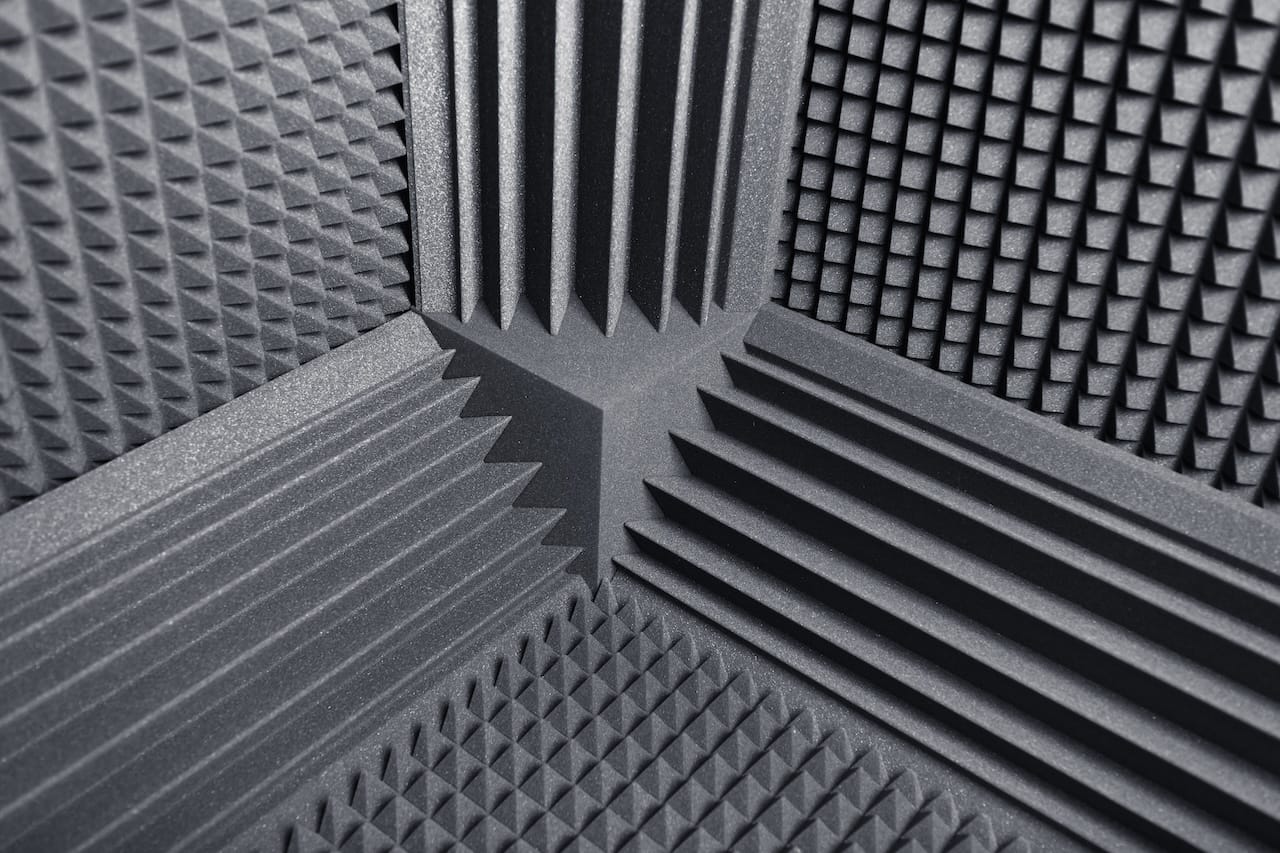
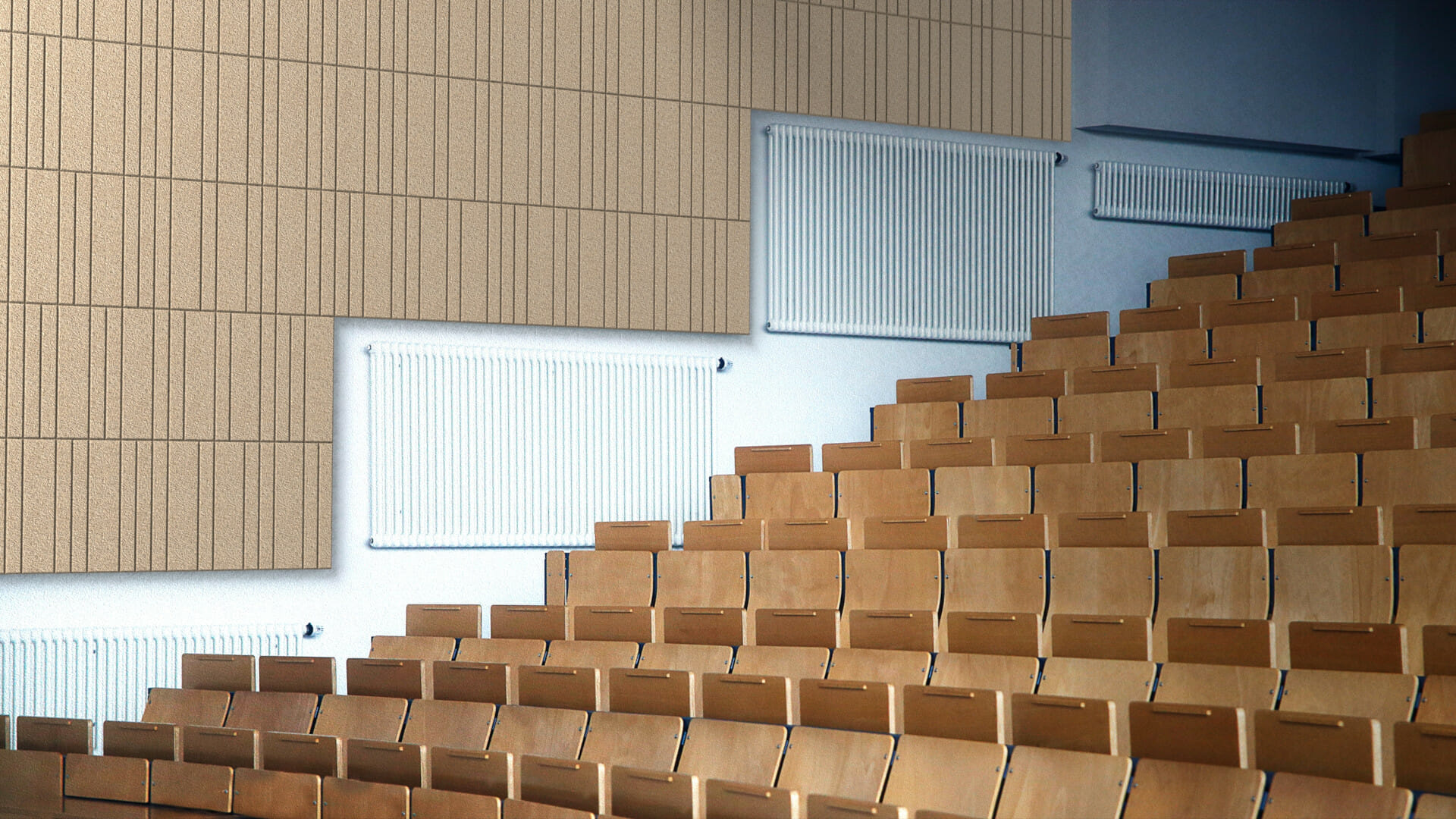
Absorption helps when a room has too much reflection. Wall and ceiling sound panels, acoustic ceiling clouds, baffles, and sound-absorbing ceiling tiles can all reduce reverberation and harshness. This can improve clarity in rooms where people need sound to feel controlled rather than chaotic.
Use Soundproofing to Control Transfer Between Spaces
Soundproofing helps when sound is moving between rooms. Walls, doors, windows, seals, barriers, and other assemblies may all play a role. The best approach depends on the path the sound is taking.
Soundproofing materials should be selected based on the actual transmission path, because a general desire for a quieter room does not identify where sound is getting through. A weak door seal, ceiling path, or window may limit the performance of an otherwise strong wall.
Use Sound Masking to Improve Privacy and Reduce Distraction
Sound masking adds a controlled background sound to make speech and distractions less noticeable. It’s commonly used in offices, healthcare spaces, legal environments, and other places where privacy and focus matter.
It also helps to understand sound masking vs acoustic treatment. Acoustic treatment changes how sound behaves inside a room. Sound masking devices add a consistent background sound that makes certain distractions less intelligible. In most cases, masking works best alongside absorption and layout decisions, not as a standalone solution or replacement for them.
The Takeaway: Measure Sound, But Design for People
Measurements matter. Decibels, NRC, STC, reverberation time, and frequency all help describe what sound is doing. But psychoacoustics reminds us that better numbers are only part of the work. A better number only matters if the space feels calmer, clearer, more private, and easier to use.
When measurement and experience are considered together, noise control becomes more practical. You can choose absorption when reflections are the issue, soundproofing when transfer is the issue, and masking when privacy or distraction is the issue.
Need help understanding how sound is behaving in your space? Contact Acoustical Surfaces for guidance on choosing the right noise control, soundproofing, or acoustic treatment solution.