
Market Trends Driving The Need for Higher Rated STC Wall Partitions
Increasing land costs have resulted in larger amounts of high density multi-family housing in a growing number of United States housing markets. The result of high density housing is individual living units positioned closer together than traditional single-family housing.
Home theater systems are becoming more prevalent in use and sophistication, resulting in the potential for more noise being transmitted between wall partitions. Commercial buildings such as schools, hospitals and hotels also have an increasing need to control sound between areas of a building.
All of these changing market dynamics have resulted in an increased need for higher rated Sound Transmission Class (STC) wall partitions, which reduce the transmission of airborne sound between living spaces within buildings.
What is an Acceptable STC Rating for a Wall Partition?
National Research Council of Canada Survey
- 600 multi-family residences (300 party walls between them)
- Residents with lower STC rated walls are more likely to:
- Want to move
- Be awakened by noises
- Have trouble falling asleep due to noises
- Think neighbors are less considerate
General Survey Conclusions
- STC ≥55 – A realistic goal for acceptable sound insulation
- STC ≥60 – More ideal, would practically eliminate negative effects of noise from neighbors
- Music related sounds may require the highest rated walls
J.S. Bradley, Deriving Acceptable Values for Party Wall Sound Insulation survey results |
Design Considerations in Acoustical Wall Partitions
The goal of a high rated STC wall partition is to decrease the amount of sound transmission through the partition. The following five variables can have impact on the ability of the partition to provide this loss.
Mass
Increasing the mass of a wall partition increases the amount of sound transmission loss. Increasing mass in a cost and space effective way can be a challenge.
Stiffness
Increasing the stiffness of a wall partition will decrease the amount of sound transmission loss. For that reason metal studs outperform wood studs, and 24″ o.c. framing spacing outperforms 16″ o.c. framing spacing.
Damping
Introduction of damping will increase the amount of sound transmission loss. In particular, constrained layer damping can be effective for structure type applications.
Cavity Depth
Increasing the depth of the cavity of the partition can increase the amount of sound transmission loss, especially when the cavity is filled with acoustical insulation.
Cavity Absorption
Adding sound-absorbing material such as fiberglass or mineral fiber insulation to the cavity of a partition will increase the amount of sound transmission loss. The sound-absorbing material should completely fill the cavity but not be compacted or compressed in any way. |
| 1/2″ Regular Gypsum Board Partitions – Wood Framing |
 |
1/2″ Regular Gypsum Board vertically applied to each side of 2 × 4 studs 16″ o.c. with 1-1/4″ type W screws 12″ o.c. Joints staggered on opposite side. 3″ glass fiber insulation in stud cavity. |
NBC-W1b |
34 |
| 1/2″ Soundbreak XP Gypsum Board Partitions – Wood Framing |
 |
1/2″ SoundBreak XP Gypsum Board vertically applied to one side of 2 × 4 studs 24″ o.c. with 1-1/4″ type W screws 12″ o.c. 1/2″ Standard Gypsum Board vertically applied to opposite side with 1-1/4″ type W screws 12″ o.c. Joints staggered on opposite side. 3″ glass fiber insulation in stud cavity. |
NGC 2009027 |
49 |
 |
Base layer of 1/2″ Standard Gypsum Board vertically applied to one side of 2 × 4 studs 24″ o.c. with 1-1/4″ type W screws 24″ o.c. Face layer of 1/2″ SoundBreak XP Gypsum Board vertically applied with 1-5/8″ type W screws 12″ o.c. 1/2″ Standard Gypsum Board vertically to opposite side with 1-1/4″ type W screws 12″ o.c. Joints staggered each layer and opposite sides. 3″ glass fiber insulation in stud cavity. |
NGC 2009028 |
51 |
| 5/8″ Soundbreak XP Gypsum Board Partitions – Steel Framing |
 |
5/8″ SoundBreak XP Gypsum Board vertically applied to one side of 3-5/8″ steel studs 24″ o.c. with 1″ type S screws 8″ o.c. at perimeter and 12″ o.c. in the field. 5/8″ Fire-Resistance Rated Gypsum Board vertically applied to opposite side with 1″ type S screws 8″ o.c. at perimeter and 12″ o.c. in the field. Joints staggered on opposite side. 3-1/2″ glass fiber in stud cavity. |
RAL TL-07-389 |
54 |
| 1 hr. |
UL |
U465 |
 |
Base layer 5/8″ SoundBreak XP Gypsum Board vertically applied to 3-5/8″ steel studs spaced 24″ o.c. with 1″ type S screws 24″ o.c. Face layer 5/8″ Fire-Resistance Rated Gypsum Board vertically applied with 1-5/8″; type S screws 12″ o.c. 5/8″ Fire-Resistance Rated Gypsum Board vertically applied to opposite side with 1″ type S screws 12″ o.c. Vertical joints staggered 24″ each layer and opposite sides. 3-1/2″ glass fiber in stud cavity. |
RAL TL-06-334 |
57 |
| 1 hr. |
UL |
UL465 |
 |
Base layer 5/8″ Soundbreak XP Gypsum Board vertically applied to 3-5/8″ steel studs spaced 24″ o.c. Two layers 5/8″ Fire-Resistance Rated Gypsum Board vertically applied to opposite side. Base layer attached with 1″ type S screws 24″ o.c. Face layer attached with 1-5/8″ type S screws 12″ o.c. Vertical joints staggered 24″ each layer and opposite sides. 3-1/2″ glass fiber in stud cavity. |
RAL TL-07-168 |
60 |
| 2 hr. |
UL |
V484 |
 |
Base layer 5/8″ SoundBreak XP Gypsum Board vertically applied to 6″ steel studs spaced 24″ o.c. with 1″ type S screws 24″ o.c. Face layer 5/8″ Fire-Resistance Rated Gypsum Board vertically applied with 1-5/8″ type S screws 12″ o.c. Two layers 5/8″ Fire-Resistance Rated Gypsum Board vertically applied to opposite side. Base layer attached with 1″ type S screws 24″ o.c. Face layer attached with 1-5/8″ type S screws 12″ o.c. Vertical joints staggered 24″ each layer and opposite sides. 6″ glass fiber in stud cavity. |
NRCC B-3456.2 |
61 |
| 2 hr |
UL |
V484 |
 |
Base layer 5/8″ SoundBreak XP Gypsum Board applied vertically to double row of 2-1/2″ steel studs 24″ o.c. with 1″ type S screws 8″ o.c. at perimeter and 12″ o.c. in the field. Face layer 5/8″ Fire-Resistance Rated Gypsum Board applied vertically to opposite side with 1″ type S screws 8″ o.c. at perimeter and 12″ o.c. in the field. Joints staggered on opposite side. 3″ glass fiber or mineral wool insulation in stud cavity. |
NGC 2008036 |
59 |
| 1 hr. |
UL |
V488 |
Note: In multi-layer systems, SoundBreak XP Gypsum Board can be used as either a face layer or a base layer without affecting the STC Rating.
UL Listed Assemblies
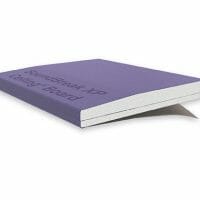
The 5/8″ SoundBreak XP Gypsum Board is tested in accordance with ASTM Standard E 119 and is classified as Type X for use in the following UL listings: U017, U301, U302, U305, U309, U326, U330, U332, U338, U339, U341, U342, U351, U354, U355, U356, U357, U358, U360, U364, U368, U369, U371, U379, U392, U405, U411, U418, U420, U425, U428, U429, U434, U439, U449, U450, U460, U465, U466, U475, U487, U494, U499, U505, U524, U525, U531, U646, U647, U648, U649, U651, U652, U926, V408, V415, V419, V420, V421, V425, V430, V432, V433, V434, V435, V438, V449, V450, V486, V483, V484, V488
UL Core Designation
5/8″ SoundBreak XP Gypsum Board: SoundBreak XP |