

 Acoustical Ceiling Tiles
When Sound Absorption Isn’t Enough: Why You Might Need Diffusion or Isolation
One of the most common misconceptions in acoustics is that every sound problem can be solved with acoustical panels. Someone walks into a noisy conference room, hears an echo in a restaurant, or struggles to understand shared conversations in a classroom and immediately starts looking for acoustic panels. In many cases, that instinct is correct. Understanding when sound absorption panels are needed is an important first step toward creating a more comfortable and functional environment.
The challenge is that not every acoustic issue has the same cause. Some problems stem from excessive echo and reverberation inside a room. Others are related to uneven sound distribution, poor speech intelligibility, or noise traveling between spaces. In some cases, vibration may be moving through the walls, floors, ceilings, or structural elements. The right solution depends on identifying the actual problem before selecting products. This article serves as a practical room acoustics guide for diagnosing acoustic issues and choosing the most effective path forward.
What Sound Absorption Actually Solves
Sound absorption is often the foundation of a successful acoustic treatment strategy because it addresses one of the most common complaints: excessive reflected sound.
When sound waves strike hard surfaces such as drywall, glass, concrete, or wood, they bounce back into the room. As those reflections build up, they create echo, reverberation, flutter echo, and overall harshness. The room becomes louder, conversations become more difficult to follow, and sound quality suffers.
This is where sound absorption panels and other absorptive treatments come into play. By capturing a portion of the sound energy instead of reflecting it, they reduce the buildup of unwanted reflections and improve overall room performance.
Absorption is frequently used in:
- Offices
- Classrooms
- Conference rooms
- Houses of worship
- Restaurants
- Media rooms
- Healthcare facilities
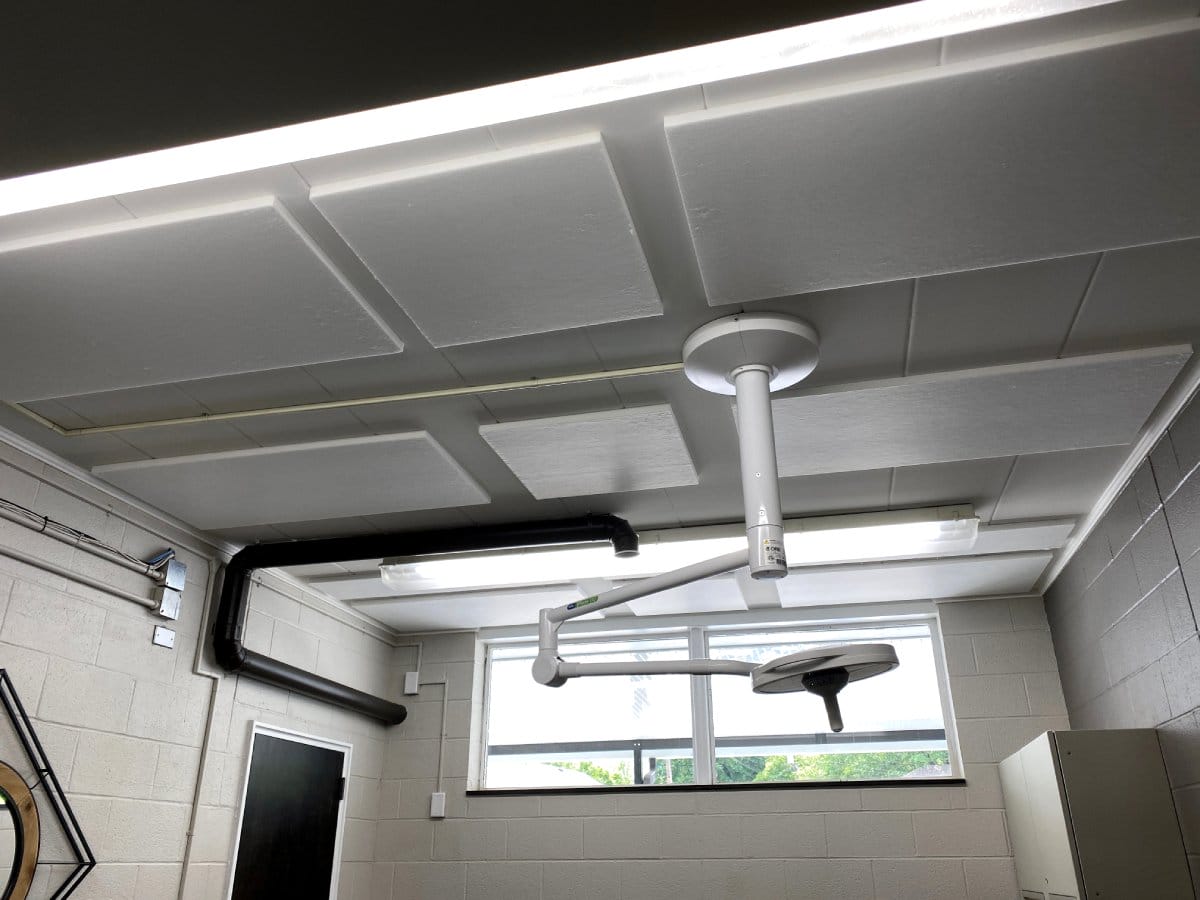
A variety of products can provide absorption depending on the application, including fabric-wrapped panels, ceiling treatments, and specialty acoustic materials.
If someone asks when acoustic panels are needed, the answer is often tied directly to echo and reverberation. Spaces with an abundance of hard, reflective finishes tend to benefit from absorption because those surfaces allow reflected sound to accumulate.
Absorption is also one of the most effective ways to address concerns such as:
- How to reduce echo in a room
- Reverberation control
- How to improve speech clarity
- Reducing listener fatigue
- Enhancing overall room comfort
However, there is an important limitation that many people overlook. Absorption improves how a room sounds internally. It does not stop sound from entering or leaving the room. Understanding that limitation is key when comparing sound isolation vs absorption.
Signs sound absorption panels are needed
While every space is different, several symptoms often indicate that absorption should be the first solution considered:
- Occupants start to speak louder to be heard over the background noise.
- Conversations sound muddy or difficult to understand.
- The room feels unusually loud even when people are speaking at normal volumes.
- You hear obvious echoes after speech or music.
- Hard surfaces dominate the space.
- Audio and video presentations lack clarity.
- Occupants complain about excessive noise buildup throughout the day.
In many environments, echo reduction panels, ceiling sound absorption systems, and other absorptive products provide a substantial improvement with relatively straightforward installation.
When Absorption Isn’t Enough
Absorption is extremely effective when reflections inside a room are causing problems. But it’s not a cure-all.
A conference room may sound better after acoustic treatment for walls is installed, yet employees can still hear conversations from neighboring offices. A music room may lose its harsh reflections but begin to feel overly muted and unnatural. A hotel may have excellent reverberation control in guest rooms while still struggling with noise transfer between floors.
Each of these examples points to a different acoustic challenge – and a different solution.
When Sound Is Leaving or Entering the Room: Sound Isolation vs Absorption
One of the most common mistakes in acoustics is assuming that absorption and soundproofing accomplish the same thing.
They do not.
If sound is traveling through walls, ceilings, doors, windows, or ductwork, adding more absorption inside the room is highly unlikely to solve the problem. Sound absorption panels are designed to manage reflections within a space and make that room sound better, not stop sound from entering or leaving a room.
If occupants hear conversations from adjacent offices, music from a neighboring tenant, or traffic from outside, the problem has more to do with structural deficiencies than room acoustics.
When a Room Starts to Sound Too Dead
Absorption can also become less effective when too much of it is used.
This is especially common in recording studios, performance venues, home theaters, and other critical listening spaces. While reducing reflections is important, eliminating too many of them can make a room feel lifeless and unnatural.
Music may lose its sense of space and fullness. Speech can feel unnatural and dry. The energy that helps a room feel engaging may disappear altogether.
This is often the point where diffusion becomes part of the conversation. Rather than removing more sound energy, diffusion helps manage reflections while preserving a natural acoustic character.
Why Diagnosis Matters More Than Products
Many acoustic challenges look similar on the surface.
An occupant may describe a room as “too noisy,” but the cause could be excessive reverberation, uneven sound distribution, sound transfer through walls, mechanical equipment noise, or a combination of factors. That’s why an acoustic problem diagnosis matters so much.
Before choosing panels, barriers, ceilings, or specialty systems, it helps to understand whether the problem exists within the room, between rooms, or throughout the building.

When You Need Diffusion Instead of More Panels
Acoustic absorption vs diffusion is often explained in technical terms, but the practical difference is relatively straightforward.
Absorption reduces sound energy by reducing reflections.
Diffusion redistributes sound energy by scattering reflections.
Rather than making a room quieter, diffusion helps make sound more evenly distributed.
What Diffusion Actually Does
Instead of capturing reflections, diffusion acoustic panels scatter sound waves in multiple directions. Think of it as spreading sound out – like a disco ball scattering light – rather than eliminating it. This helps break up strong reflections without making the room significantly quieter.
The result is often better consistency throughout the room, improved room sound quality, and a more natural listening experience.
Where Diffusion Works Best
Diffusion is commonly used in environments where sound quality matters as much as noise control, including recording studios, performance spaces, home theaters, houses of worship, and music rehearsal rooms.
These spaces often benefit from a balance of absorption and diffusion, with diffusion helping preserve openness and energy.
When You Need Isolation Instead
When sound crosses from one space into another, the conversation shifts from acoustic treatment to soundproofing.
This is where soundproofing vs acoustic treatment often causes confusion. Acoustic treatment improves conditions inside a room while soundproofing reduces sound transmission between spaces.
Signs the Problem Is Sound Transmission
If you can hear conversations through a wall, music from another room, traffic noise, or mechanical equipment from somewhere else in the building, the issue is usually isolation rather than absorption.
Common warning signs include:
- Speech transmission between offices
- Sound transfer through walls
- Mechanical equipment noise
- Music leaking between spaces
- Traffic noise intrusion
- Noise between floors
Read More: How Sound Travels in a Room
Common Isolation Solutions
If sound is moving between spaces, addressing the building assembly becomes the priority. Common solutions include:
- Sound-rated doors
- Window inserts
- Acoustic sealants
- Mass-loaded barriers
- Damping compounds
- Decoupling clips (RSCI-1 clips)
- Floor-ceiling assemblies
- Industrial-grade noise barrier curtains
- Soundproof wall systems
When the goal is blocking sound between rooms, a combination of construction methods and acoustic products is often required.
Don’t Overlook Weak Points
Sound tends to find the weakest path.
Even a well-designed wall assembly can be compromised by gaps around doors, poorly sealed windows, HVAC penetrations, or other openings. In many isolation projects, addressing these weak points delivers greater benefits than simply adding more material to the wall itself.
How to Choose the Right Acoustic Strategy
1. Identify the Primary Acoustic Problem
Start by determining what’s actually wrong.
Is there excessive echo? Are conversations difficult to understand? Does the room sound uneven? Is noise moving between spaces?
Different symptoms point toward different acoustic challenges. Correct diagnosis is often more important than the products themselves.
2. Match the Problem to the Right Solution
Echo and reverberation typically call for absorption.
Uneven or overly dead sound may benefit from diffusion.
Noise leakage into or out of a room generally requires isolation measures.
Many facilities ultimately benefit from multiple acoustic treatment solutions working together.
3. Build a Layered Acoustic Plan
Most commercial and institutional spaces perform best when acoustic products are selected as part of a coordinated system.
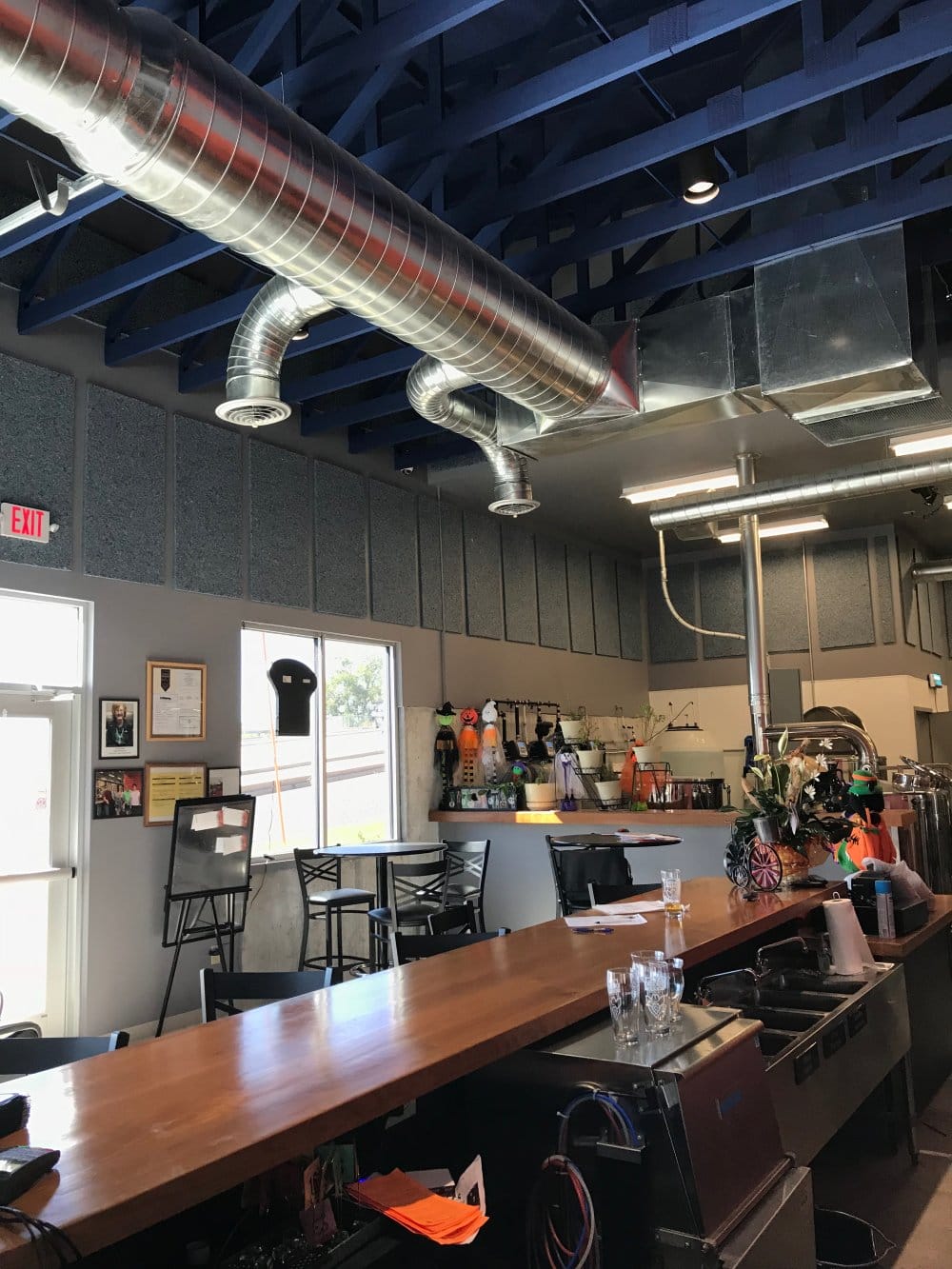
A complete solution may combine wall treatments, ceiling sound absorption systems, diffusive surfaces, barriers, acoustic seals, isolation assemblies, and other specialized noise control products. Performance improves when these elements work together rather than functioning as individual fixes.
Know When to Bring in an Acoustic Expert
Acoustic treatment works best when it is based on the actual problem rather than assumptions.
Absorption remains one of the most effective tools for controlling echo, improving speech intelligibility, and achieving reliable reverberation control. Diffusion helps create balance when sound quality matters, while isolation becomes essential whenever sound crosses room boundaries.
The challenge is determining which of those conditions exists in your space – and many projects involve more than one.
If you’re evaluating a new facility, renovating an existing environment, or troubleshooting multiple noise concerns, working with the acoustical experts at Acoustical Surfaces can help identify the most effective path forward. Expert guidance often prevents overspending on the wrong products and helps ensure every component contributes to a cohesive acoustic strategy. Understanding when sound absorption panels are needed is important, but understanding when diffusion or isolation may be required can lead to far better results.